blog

From Flagged to Fixed: How Loss Prevention Case Management Solves the $47.8 Billion Shrink Problem
From Flagged to Fixed: How Loss Prevention Case Management Solves the $47.8 Billion Shrink Problem

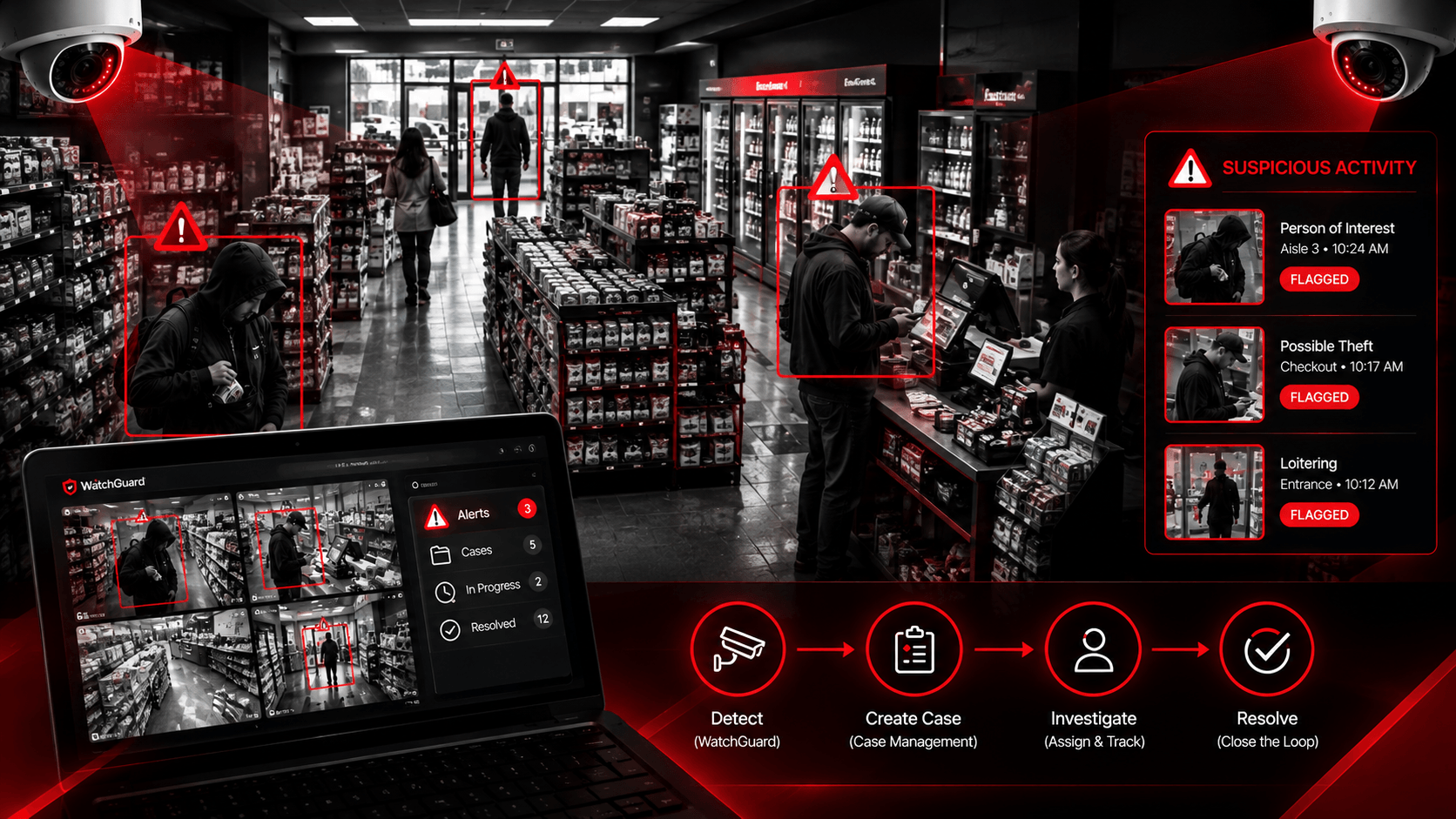
U.S. retailers lost an estimated $47.8 billion to shrinkage in 2025, and that number is projected to climb past $55 billion by 2028 if current trends continue. Here's the part most owners don't expect roughly 73% of that loss is considered preventable.
So why isn't it being prevented? In most stores, the technology to catch a problem has gotten a lot better cameras, POS exception alerts, self-checkout monitoring. But catching an incident and actually resolving it are two very different things. That gap between "flagged" and "fixed" is where most preventable shrink quietly slips through.
What Is Shoplifting in Retail, Really?
In Retail, Shrink is often talked about as a single problem, but it's really four separate ones layered together:
- External theft (shoplifting) : The classic image most people have, but it's only part of the picture
- Employee theft : Internal theft alone accounts for nearly 30% of total shrink, an estimated $26 billion nationally
- Administrative and process errors : Pricing mistakes, receiving errors, and paperwork issues that quietly erode margin
- Vendor and delivery fraud : Discrepancies between what's billed and what's actually delivered
Shoplifting and theft aren't quite the same thing, either. Shoplifting specifically refers to concealing or removing merchandise from a store without paying, while theft is the broader legal term covering any unlawful taking of property including employee theft, vendor fraud, and organized retail crime.
Common shoplifting tactics include price-tag switching, item concealment, receipt fraud, and increasingly, exploiting self-checkout blind spots.
The Real Cost of Shrink
The dollar figures are only part of the story and the rate of loss matters just as much. Self-checkout lanes, for example, see a shrink rate of roughly 3.5%, more than 16 times higher than the shrink rate at staffed checkout lanes.
For c-store and gas station owners specifically, this hits differently than it does for big-box retail. A single lost case of high-margin product, a skimmed fuel transaction, or an unresolved employee theft case can meaningfully dent a location's monthly numbers. There's no scale to absorb it the way a large chain can.
How Much Can Surveillance Actually Save You?
These aren't rough estimates real-world case studies and industry benchmarks show retailers cutting shrink by 20% to 83% after adding surveillance technology.
- Industry benchmarks show retailers can expect a 20–30% shrinkage reduction within 6–12 months of deploying comprehensive loss prevention technology
- One grocery operator cut cash shrink from roughly 6% down to 1% an 83% reduction after layering AI-driven video analytics onto their existing cameras, with merchandise shrink dropping from 10–15% to around 6%
- A California market that was losing close to $40,000 a year to theft saw meaningful losses recovered after adding AI-based monitoring that alerted staff in real time
- A hardware store in a high-crime San Francisco neighborhood reported a 50% drop in theft after adopting AI-powered surveillance enough to keep the business viable in that location
- In high-risk categories like health and beauty, some national retailers have seen shrink drop by up to 60% within months of AI deployment
For a c-store or gas station, even the conservative end of that range matters. A location losing $30,000–$40,000 a year to shrink a realistic number once employee theft, admin errors, and shoplifting are combined could plausibly recover $6,000–$12,000 annually just from the detection side alone. Pairing that detection with case management to actually close out what gets flagged is what pushes those numbers toward the higher end of the range.
Where WatchGuard Fits In
WatchGuard is a surveillance and store-monitoring solution built specifically for independent retailers, c-stores, and gas stations.
The operators who need enterprise-grade loss prevention without an enterprise-sized budget or team. Rather than relying on cameras alone, WatchGuard connects video directly to point-of-sale activity, so every voided transaction, refund, or no-sale gets flagged and tied to actual footage in real time, giving owners a clear view of what's happening across one store or an entire multi-location portfolio.
On its own, that solves half the problem: it catches what's happening. Paired with case management software, it solves the other half every alert WatchGuard flags becomes a documented, assignable, trackable case instead of a clip that gets watched once and forgotten.
That's the combination that turns a 20–30% shrink reduction from a theoretical industry benchmark into something an independent operator can actually achieve.
73% Preventable — So Why Isn't It Prevented?
Loss prevention has gotten better at one thing, catching problems as they happen. Better cameras, smarter POS exception reports, AI that flags a suspicious void or no-sale transaction in real time the disconnect is what happens next.
All of that genuinely useful exception-based analytics on POS data is the backbone of any modern loss prevention program. But a flag isn't a fix. Without a system to document what happened, assign someone to follow up, and track the incident through to resolution, most flagged cases just... pile up. They get noted, maybe discussed once, and then forgotten while the person or process causing the loss keeps operating exactly as before.
From Flagged to Fixed: What Happens After an Incident
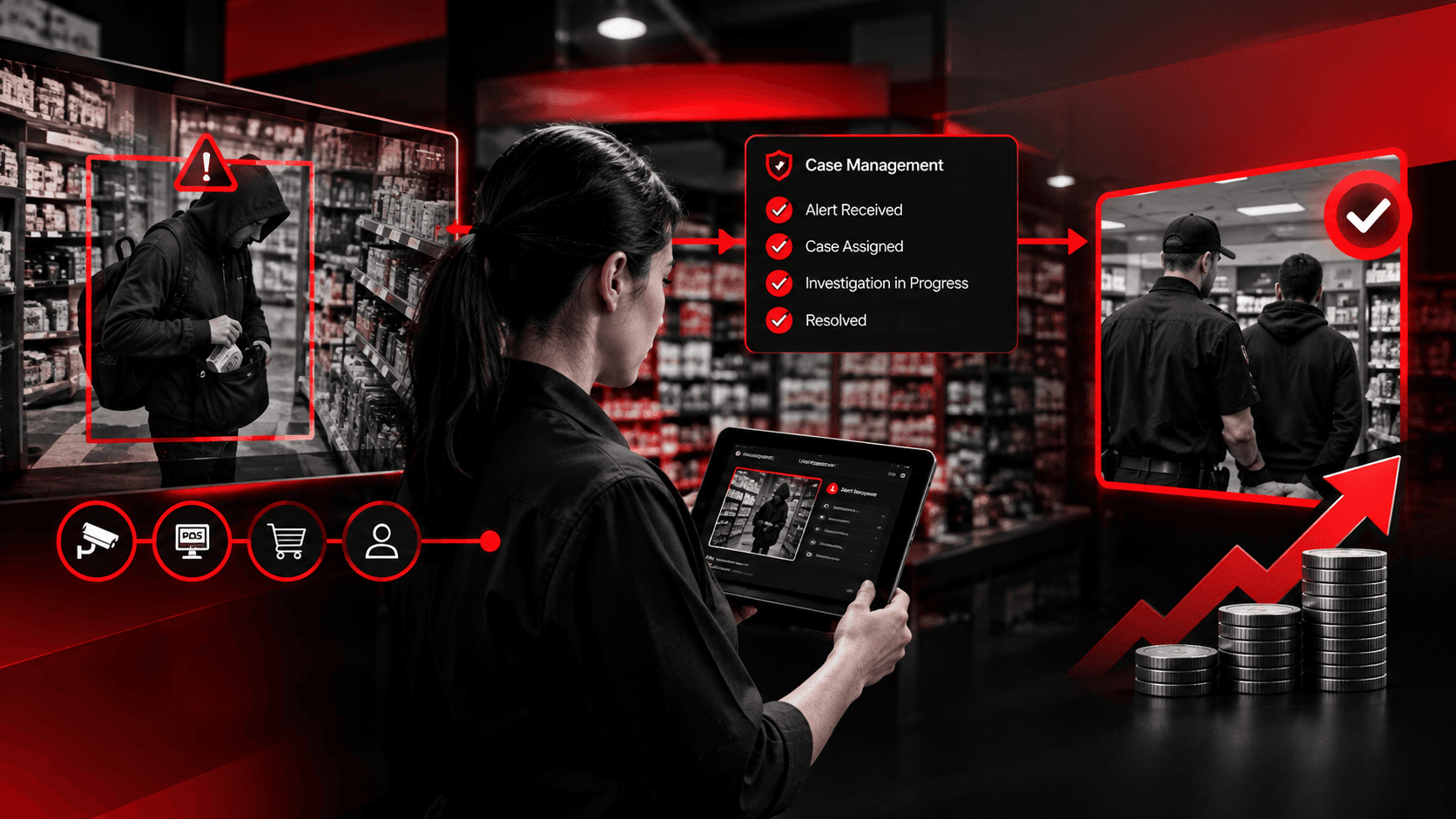
So what should you actually do after catching a theft or suspicious transaction in your store? Here's the step-by-step response that turns a flag into a resolved case.
- Document it immediately : Time, location, transaction ID, and any available video evidence
- Assign ownership : Someone needs to be responsible for following up, whether that's a store manager, a regional LP contact, or ownership directly
- Decide on escalation : Internal correction, HR involvement, or law enforcement referral, depending on severity
- Track the pattern : Is this a one-off, or the third incident this month from the same shift, the same register, or the same vendor?
That fourth step is where most independent operators fall short not because they don't care, but because without dedicated software, it's nearly impossible to spot a pattern across weeks of scattered notes, texts, and memory.
What Loss Prevention Case Management Software Actually Does
Loss prevention case management software is built to close exactly this gap. Rather than treating detection and resolution as separate problems, it manages the full lifecycle of an incident from flag to close:
- Centralized incident logging : Every flagged event gets recorded in one place instead of scattered across notebooks, texts, and memory
- Evidence attachment : Video clips, receipts, and POS data get linked directly to the case, creating a record that actually holds up if HR or law enforcement gets involved
- Multi-store visibility : For operators with more than one location, cases can be tracked and compared across the whole portfolio, not just one store in isolation
- Repeat-offender and pattern tracking : A searchable case history makes it possible to spot the same employee, the same register, or the same time slot showing up again and again
- Audit-ready trail : A documented history that supports internal audits, insurance claims, and any legal follow-up
Good case and incident management software helps loss prevention teams manage that entire lifecycle from the moment something is detected to the moment it's actually closed out. Without it, exception-based reporting just produces a growing list of unresolved alerts.
Practical Prevention Tips for C-Store & Gas Station Owners
A few starting points that pair well with case management software rather than replacing the need for it:
- Pair surveillance with transaction data, not just video alone flags tied to actual POS activity are far more actionable than raw footage
- Train staff to recognize common tactics price-tag switching, concealment, and self-checkout exploitation are still the most common entry points
- Review void, refund, and no-sale reports weekly, not just when something feels off
- Log every incident, even small ones a $12 loss today might be the same pattern as a $1,200 loss next quarter
- Build a simple escalation path ahead of time, so nobody's improvising the first time something serious happens
FAQ
What's the difference between shoplifting and theft?
Shoplifting refers specifically to taking merchandise from a retail store without paying. Theft is the broader legal category that also covers employee theft, vendor fraud, and organized retail crime.
What happens when someone steals from a store?
It depends on severity and store policy ranging from an internal warning or restitution request for minor incidents, up to police involvement and prosecution for repeat offenses or organized theft. Having a documented case history matters at every level of that response.
How much does shoplifting cost retailers each year?
Retail shrink which includes shoplifting alongside employee theft, errors, and fraud cost U.S. retailers an estimated $47.8 billion in 2025.
Is self-checkout increasing retail theft?
Yes, self-checkout lanes show a shrink rate roughly 16 times higher than staffed lanes, making them a growing area of concern for retailers of all sizes.
The Bottom Line
Catching a suspicious transaction isn't the hard part anymore; most stores already have some form of detection in place. The hard part is what happens next: documenting it, assigning it, tracking it, and actually closing it out before it repeats. That's the difference between flagged and fixed and it's the difference between shrink that just gets noticed, and shrink that actually gets stopped.
Follow MostEdge on Instagram & YouTube for more retail loss prevention insights that help protect every penny in your store.


You Found a $10,000 Inventory Variance. What Should You Do Next?
Beyond Fast Response: What C-Store Operators Really Need From Customer Support

Back-to-School 2026 Shoppers Are Spending Differently—and Convenience Stores Have an Opening
Explore More

Trusted By Many
Become A Part Of It