blog

Dollar Tree Is Closing 75 Stores and Opening 400 — Here's the Lesson Every Store Owner Should Take From It
Dollar Tree Is Closing 75 Stores and Opening 400 — Here's the Lesson Every Store Owner Should Take From It

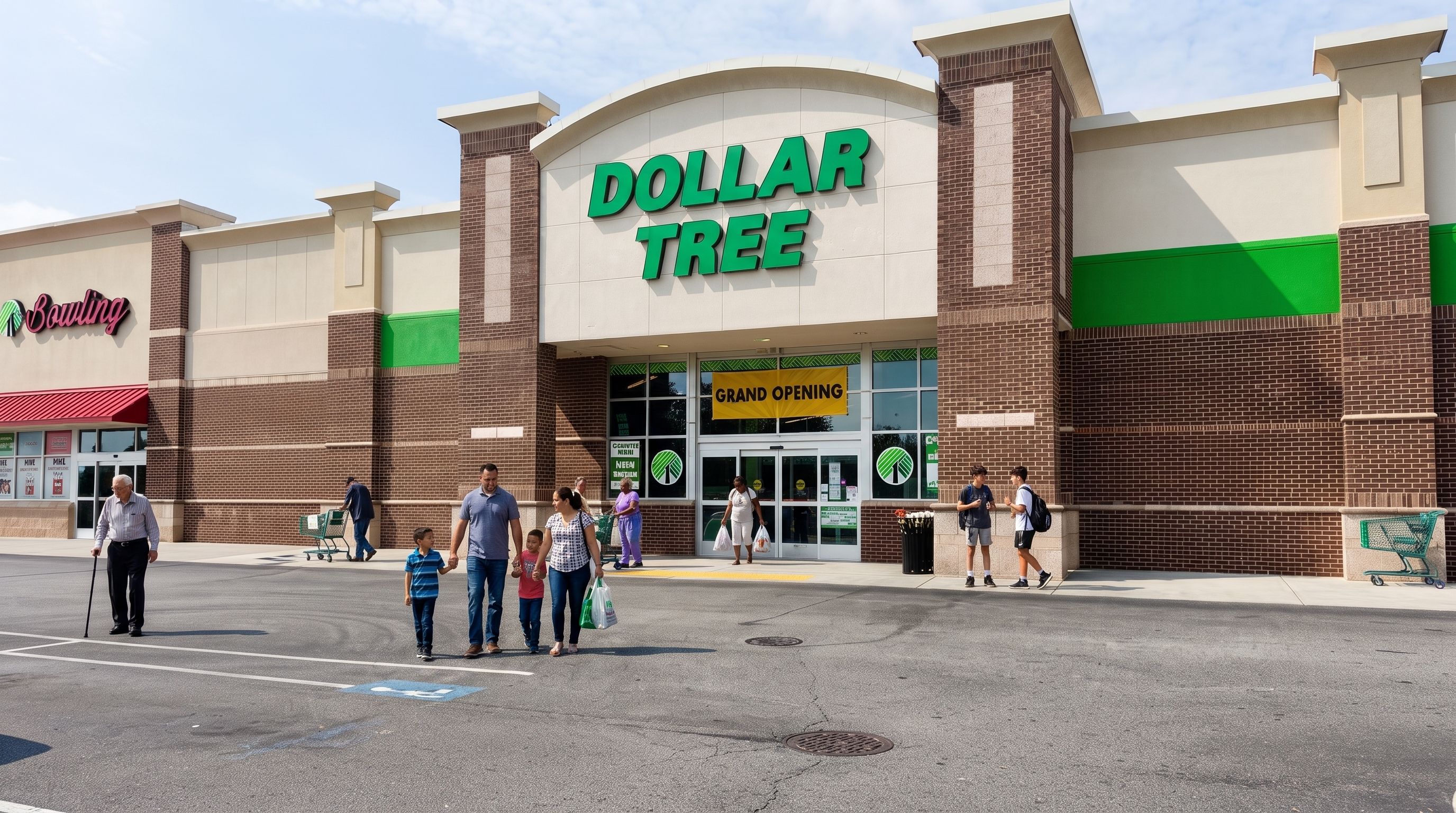
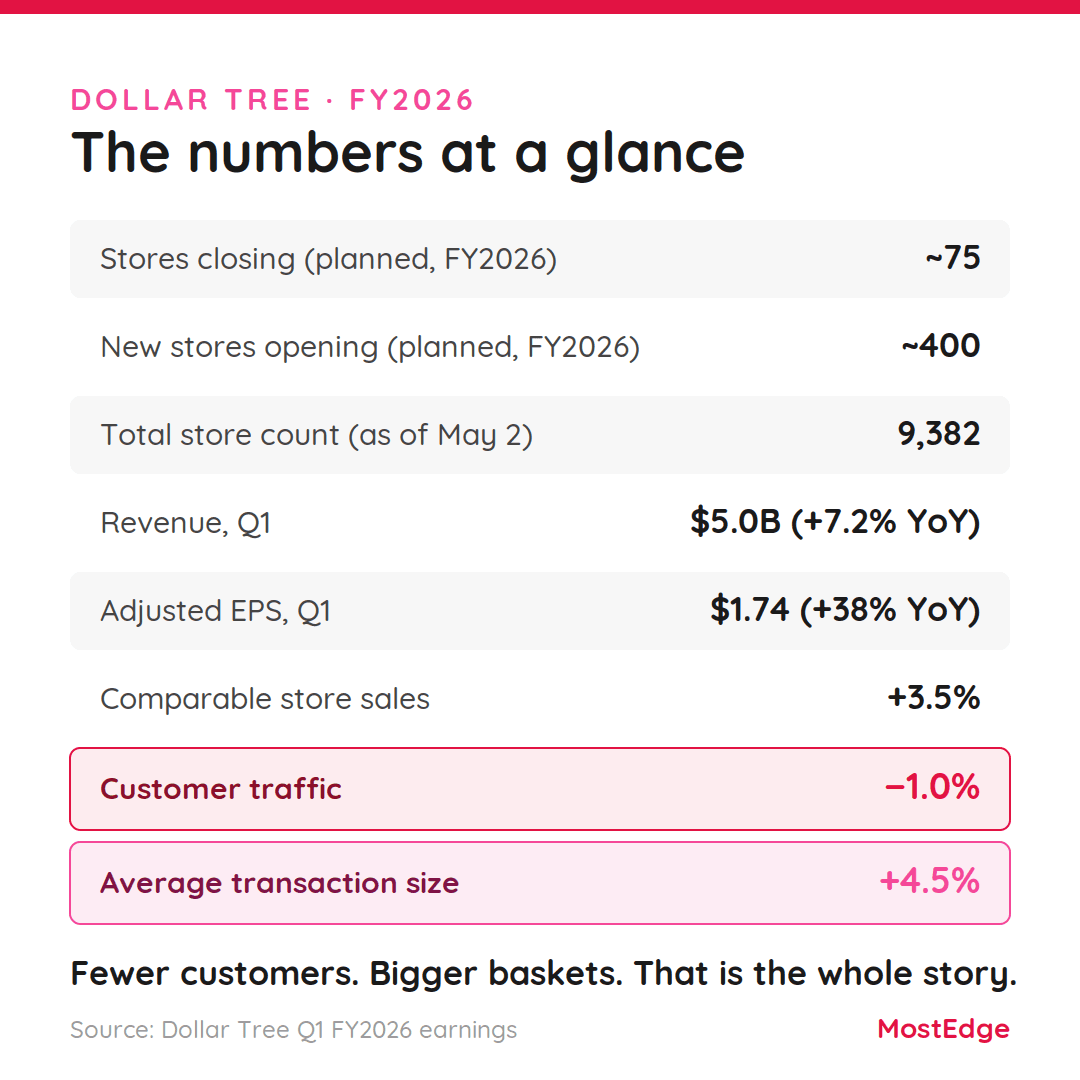
Dollar Tree is closing around 75 stores across the United States. But read one line further, and the story flips completely. The same company is opening roughly 400 new locations in fiscal 2026 — which means its total footprint is growing, not shrinking.
Dollar Tree ended its first quarter with 9,382 stores across the U.S. and Canada, after opening 113 new locations in the quarter alone. Its Q1 results beat analyst expectations: revenue of $5.0 billion, up 7.2% year over year, and adjusted earnings per share up 38%. The company even raised its full-year profit guidance.
So this is not a story about a retailer in trouble. It is a story about a retailer making deliberate, data-backed decisions about where its money works hardest — and that is the part every convenience store and small retail chain owner should study.
What Is Actually Happening ?
The headlines focus on closures, but the earnings report tells a different story — one of calculated moves, not retreat. Strip away the noise and three facts remain:
1. The closures are surgical, not desperate. Out of more than 9,300 stores, Dollar Tree is closing about 75 — less than 1% of its fleet. Company leadership has openly acknowledged that a portion of its stores fall below its own operating standards. Some get remodeled. The ones where the numbers cannot be fixed get closed. Nothing emotional, nothing dramatic — just a clear standard applied store by store.
2. The new stores are going where the data points. A Bloomberg analysis found that 49% of Dollar Tree's new openings over the past six years landed in higher-income metro neighborhoods, up from 41% in the six years before. The shift suggests that Dollar Tree is increasingly looking beyond traditional store locations as it evaluates where new stores can perform best.
3. Growth is coming from bigger baskets, not more footfall. Here is the number most coverage skipped: Dollar Tree's customer traffic actually fell 1.0% in Q1. Yet comparable store sales rose 3.5% — because the average transaction size grew 4.5%. After moving about 5,900 of its stores to a multi-price format (no longer everything at $1), each customer is simply spending more per visit.
The Real Lesson: Expansion Without Burning Profit
Most independent retailers grow the opposite way. A store does well, cash builds up, and the owner opens a second location based on gut feeling — a vacant shop nearby, a good rent deal, a relative's recommendation. Sometimes it works. Often, the new store quietly drains the profit the first store generates, and the owner does not see it clearly until years later.
Dollar Tree's playbook shows the disciplined alternative, and it rests on three questions any store owner can ask:
Question 1: Do you know which store — or which category — is actually underperforming?
Dollar Tree's ability to make portfolio decisions at this scale highlights the importance of measuring store-level performance across metrics such as sales, margins, shrink, labor costs and other operating indicators. For smaller retailers, the challenge is often not a lack of data—but the difficulty of bringing that data together quickly enough to make decisions.
This is where a retail business dashboard changes the game. When daily sales, margins, and expenses from every location flow into one store performance dashboard, weak spots show up in weeks — not at year-end when the damage is done. That is precisely what Store Pulse was built for, and Store 360 closes the loop by reconciling the books so the numbers you act on are numbers you can trust.
Question 2: Are you choosing new locations on data or on availability?
Dollar Tree shifted nearly half of its new openings toward higher-income neighborhoods because the data showed those shoppers spend more per visit. The takeaway for a c-store owner planning a second or third location: the question is not "is this space available and cheap?" but "what does the customer traffic, basket potential, and competition around this spot look like?" A cheap location that produces small baskets is more expensive than a costlier location that produces large ones. Define your own store count criteria before you sign the lease — not after.
Question 3: Are you growing baskets, or just counting footfall?
Dollar Tree grew sales while traffic declined, purely through pricing flexibility and assortment. For a c-store, the same levers exist: smarter price points on high-movement items, bundled offers, and in-store promotion at the moment of purchase. Margin 360 helps operators manage retail pricing with the same flexibility Dollar Tree gained from its multi-price move, and MostEdge TV turns idle screen space into a basket-building tool — promoting the combo, the upgrade, the impulse item — while the customer is already standing in your c-store.
The Bottom Line
Dollar Tree's announcement is not a closure story. It is a masterclass in disciplined growth: measure every store honestly, cut where the numbers cannot be fixed, expand where the data supports it, and grow revenue per customer instead of chasing footfall alone.
The company can do this because it sees its business clearly, in real time, across every location. That visibility used to be a big-chain privilege. Today, a single-store operator in Atlanta or a five-store chain anywhere in the country can run the same playbook.
Know which stores are growing, which are slipping, and where your next investment should go. MostEdge gives convenience retailers the visibility to make store-level decisions with confidence and turn store data into better decisions.


7 Common Vendor Invoice Mistakes That Impact Profitability

5 Inventory Management Problems That Start Before a Product Reaches the Shelf

Inventory Accuracy: How to Make Better Decisions With Store Inventory Data
Explore More

Trusted By Many
Become A Part Of It