
7 Fuel Pricing Strategies That Protect Margins


Retail fuel net margins are thin, frequently averaging just $0.03 to $0.07 per gallon, so small errors compound fast. Picture a station that updates pump prices hours after a wholesale rack spike, while a duplicate vendor invoice slips through unchecked. Each leak looks minor, yet a few cents per gallon on 5,000 gallons a day adds up fast.
A fuel pricing strategy fixes this with clear algorithmic rules: price from replacement cost, enforce a margin floor, and back it with tight controls like invoice sorting and tank-to-POS audits so margin stays in the business. The result: thin margins that stay protected.
Core Principles & System Architecture
- Replacement-Cost Pricing: Never price from historical tank inventory. Always price relative to your next expected wholesale delivery to ensure sudden rack spikes do not drain your liquid working capital.
- Live Data Ingestion: Ingest live wholesale terminal feeds automatically, adding known freight fees and taxes to maintain an accurate baseline cost.
- Decoupled Multi-Store Logic: Avoid a single corporate strategy. Configure logic at the store profile level to account for hyper-local competitor clusters, traffic patterns, and inside-store conversion rates.
Eliminating Capital Leakage
A sophisticated fuel pricing strategy fails if margin leaks out post-sale. Your system requires four rigid back-office validation layers:
- Shift Accountability: Enforce standardized dual-verification cash tracking at shift changes. Requiring digital verification of drops, safe balances, and lottery stock from both cashiers and managers eliminates untraceable voids.
- Wetstock Audits: Connect directly to Automatic Tank Gauges (ATGs). Cross-referencing continuous tank telemetry with POS sales logs flags delivery shortages and temperature shrinkage early, maintaining compliance under federal release detection rules (40 CFR Part 280, Subpart D).
- Invoice Hygiene: Process supplier data in a strict linear sequence: sort inventory datasets by Product Code before database commits to catch duplicate billing and vendor entry errors. For a closer look at supplier billing problems, see these common vendor invoice mistakes that can affect retail profitability.
- Exception Reporting: Filter transaction streams to display only specific operational outliers such as abnormal shift variances or high void volumes rather than dumping raw logs on site managers.

7 Fuel Pricing Strategies for Independent Operators
Managing retail fuel requires balancing local competition, operating costs, volume, and site profitability. Because fuel net margins are thin, operators reflexively matching a competitor's every move risk capital erosion. Custom software solutions allow independent operators to configure precise, rule-based logic to systematically safeguard margins while maintaining an optimal competitive posture.
Strategy 1: Compete Without Starting a Price War
Your platform must segment competitors into price leaders and followers. The pricing engine should handle these entities with conditional rules rather than reactionary reflexes.
Retailers can also explore technology-driven strategies to improve c-store fuel margins, including competitor monitoring, pricing management, and fuel delivery verification.
Program the system to maintain a strategic micro-spread of a fixed small gap above aggressive discounters. This preserves volume without pulling the local market into a downward price war. Because price cycles rise quickly and fall slowly, follow wholesale rack increases promptly while delaying downward matches. Understanding how oil market volatility puts pressure on fuel margins can help operators recognize why wholesale price movements require careful retail pricing decisions.
If a competitive cut breaches your margin floor, freeze the price at that boundary and let the local price cycle run until competitor rates recover, avoiding giving up vital cents per gallon to reactionary cuts.
Strategy 2: Set a Minimum Acceptable Margin
Developers must build a rigid margin floor directly into the core pricing logic. This floor must dynamically reflect real, per-gallon operational expenses, including card swipe fees, store labor, and site utilities. When an automated competitor-matching routine tries to drop pump rates below this threshold, the platform must instantly intercept the request, freeze the price change, and flag the transaction exception for immediate review. This ensures matching logic never accidentally prices fuel below your real cost of selling it.
Strategy 3: Run a Break-Even Fuel Volume Calculation Before Cutting Prices
A price cut only generates profit if extra gallons replace lost margin dollars. Evaluate prospective price reductions using a strict gross-profit relationship.
For a standard five-cent cut, the volume gain needed shifts based on starting margins: at a 20-cent margin, you need 33% more volume, whereas at a 40-cent margin, the required surge drops to 14%. If traffic telemetry confirms local road congestion cannot deliver that traffic spike, the system must automatically reject the cut.
Strategy 4: Defend Your Position with Value, Not Just Price
Not every driver chooses a station based on price alone. Bright forecourt lighting, clean facilities, rapid service, and strong indoor convenience offerings command a natural price premium. Industry data demonstrates that foodservice operations alone accounted for almost 40% of inside gross profit dollars across retail networks.
Custom systems should build this reality into the fuel pricing strategy itself, maintaining stable fuel margins when inside-store conversion rates are strong, preserving margin instead of draining capital to compete on price alone.
Strategy 5: Adjust to Local Conditions
Retail fuel pricing must adapt to localized environmental factors and geographical demand. A store positioned on a high-volume morning commute corridor experiences entirely different consumer elasticity than an asset situated on a quiet residential street. Your database schema must track local traffic patterns and competitor behavior by time of day, ensuring the core engine avoids applying an unoptimized, blanket pricing structure to fundamentally mismatched store assets.
Strategy 6: Treat Cash, Credit, and Loyalty Pricing Separately
Because card fees drain cash flow, pricing engines must model cash, card, and loyalty transactions as separate financial cases. Integrating cash-discount modules and dual-pricing rules into payment pipelines passes processing overhead directly to the consumer. Furthermore, loyalty modules should target specific margin reductions at repeat customers via secure digital rewards, without lowering the posted open-market pump price for passing traffic.
Strategy 7: Match Strategy to the Store Asset Type
Multi-store networks must classify every individual location within the database based on unique asset capabilities. High-conversion locations featuring quick-service food lines or automated car washes can safely run an aggressive, volume-led fuel strategy because the pumps function primarily as a customer acquisition engine for higher-margin inside space.
Conversely, fuel-only assets or low-conversion sites must be hardcoded to protect their net margin per gallon, forcing the system to isolate the operational role of fuel before executing automated matching rules. In practice, the best fuel pricing strategy is one defined per store rather than per chain.
This becomes particularly important for growing retailers, where pricing control across multiple store locations requires consistent oversight without ignoring individual store conditions.
The Financial Impact of Micro-Margin Optimization
The mathematical significance of securing these tightly controlled forecourt and back-office boundaries cannot be overstated. Consider a standard competitive retail location pumping an average volume of 5,000 gallons of fuel per day.
If your fuel pricing strategy combines replacement-cost pricing engines with rigid margin floors to eliminate internal capital leakage and optimize pump logic, a minor average net margin increase of just 3 cents per gallon yields substantial returns.
When multiplied across a growing multi-store retail chain, it becomes clear why managing small, per-gallon operational gains and sealing backend leaks is the absolute foundation of scaling a profitable retail footprint.
FAQ
What is a fuel pricing strategy?
It is a defined set of rules for how you set pump prices: which cost you price from, your minimum margin, how you respond to competitors, and how the approach differs by store.
What is replacement-cost pricing?
It means setting the pump price from the cost of your next expected delivery, not from what you paid for fuel already in your underground tanks. This ensures that a sudden wholesale rack price increase does not leave you selling product below its restocking cost, protecting your liquid working capital.
What is a margin floor?
It is a minimum per-gallon margin built directly into your pricing logic, calculated from real operational costs such as card swipe fees, store labor, and site utilities.
How do I know if matching a competitor's price cut is worth it?
You must evaluate the prospective reduction against your system's built-in break-even formula: divide the price cut by your current margin minus the cut. If local traffic Remote sensing and geographical congestion cannot deliver that calculated volume increase, matching the cut results in an immediate net loss.
Conclusion
A fuel pricing strategy is what separates stations that keep their margin from those that give it away. Net margins are small enough that discipline decides the outcome: price from replacement cost, set a margin floor, test every price match against break-even volume, tailor the approach to each store, and reconcile cash and tank data so earned margin stays in the business.
No system removes market risk, but a clear fuel pricing strategy reduces how much of a wholesale swing or competitor move lands on your bottom line.

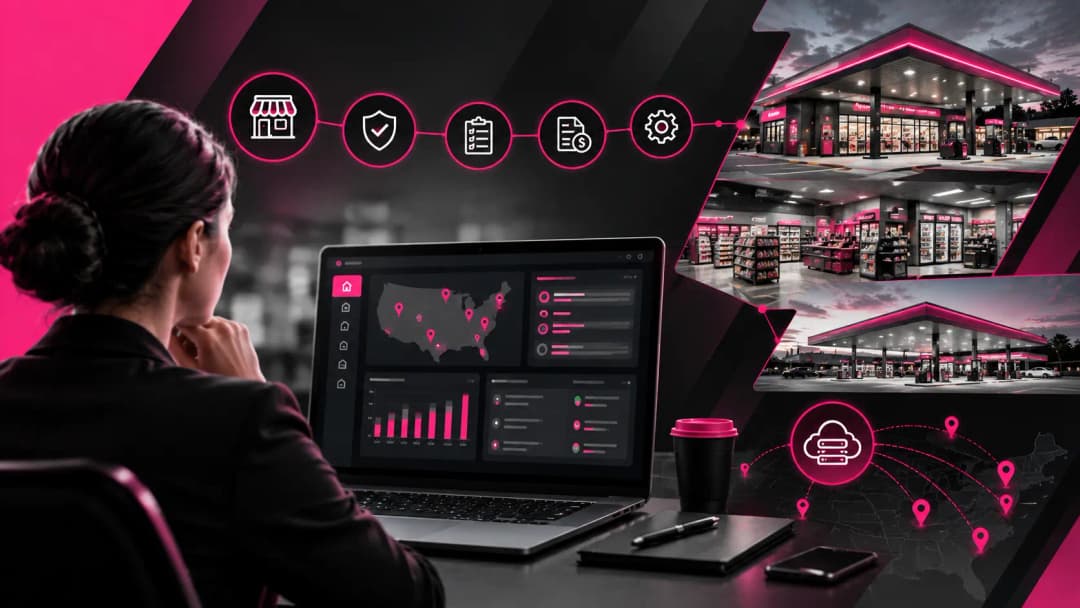
Why Growing Retail Chains Need Centralized Operational Monitoring
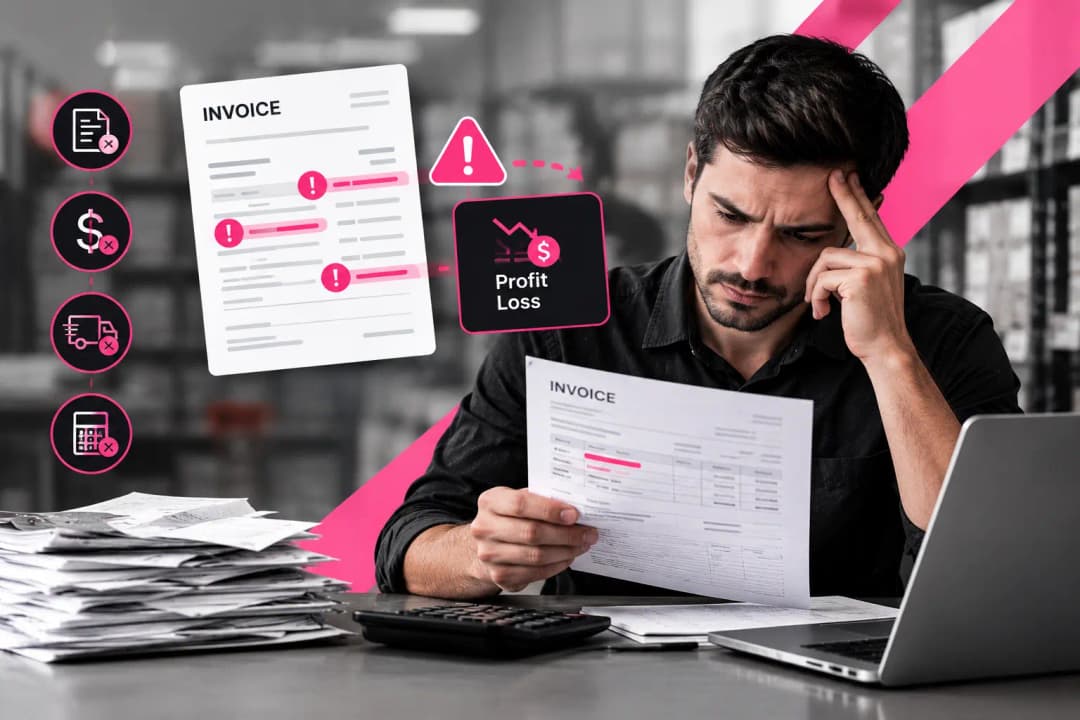
7 Common Vendor Invoice Mistakes That Impact Profitability

5 Inventory Management Problems That Start Before a Product Reaches the Shelf
Explore More

Trusted By Many
Become A Part Of It


