7 Common Vendor Invoice Mistakes That Impact Profitability

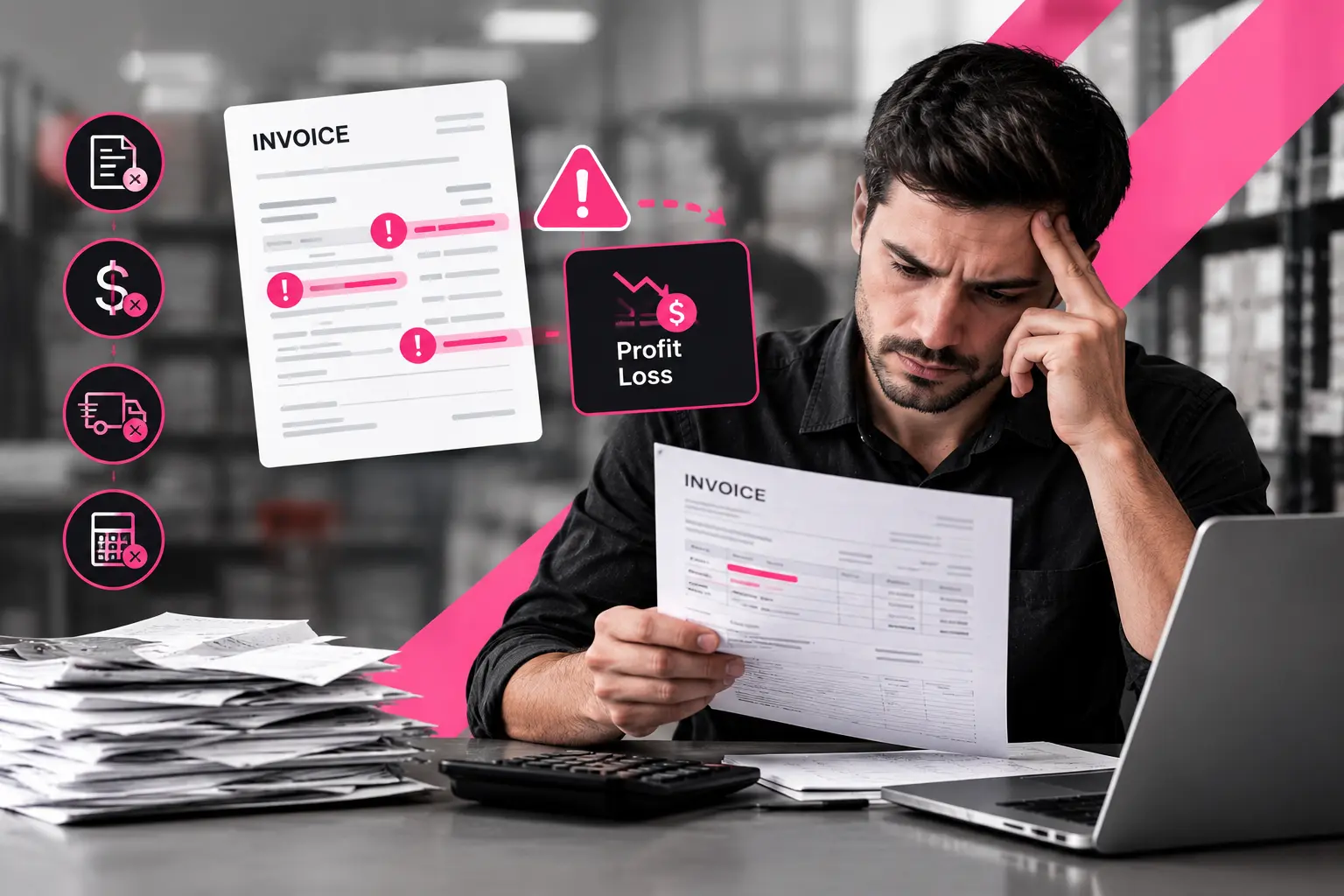
Fuel made up 65.0% of convenience store sales dollars but only 38.8% of gross profit dollars in 2025, according to NACS State of the Industry data. Direct store operating expenses rose 4.2% that year, NACS reported via C-Store Dive. When each sales dollar brings in limited gross profit, one overpaid supplier invoice hurts more than it seems.
Vendor invoice mistakes are common, too:
- 8.5%: The share of invoices that were duplicates in an OpenEnvoy review of $500 million in customer invoices. This counts duplicates received, not always paid. It comes from an accounts payable automation company and is not specific to convenience stores.
- 0.8%: the average share of yearly payments that even top performers report as duplicate or erroneous, per APQC benchmarking data, as reported by CFO.com. A small percentage can still add up to a lot of money across many invoices.
- 7 mistakes, 3 documents, 1 sample review: this article covers seven common vendor invoice mistakes, the three documents that catch most of them (purchase order, receiving record, and invoice), and a sample review you can do this week.
For convenience store operators and fuel retailers, profit depends on more than sales and shelf prices. It also depends on checking what suppliers bill against what the store ordered, received, and agreed to pay. Knowing the most common vendor invoice mistakes helps you catch problems before you pay, get back credits you are owed, avoid extra fees, and protect your margins.
Here are 7 Vendor Invoice Mistakes to Catch Before Payment
Supplier invoice errors and other supplier billing issues can happen at any point, from the price a supplier charges to the amount your store finally pays. Some lead to overpayment. Others lead to missed credits, extra fees, or time spent fixing records. Not every discrepancy is a confirmed error, and not every error cuts into profit. It depends on whether the problem is caught and fixed.
1. Incorrect Supplier Pricing
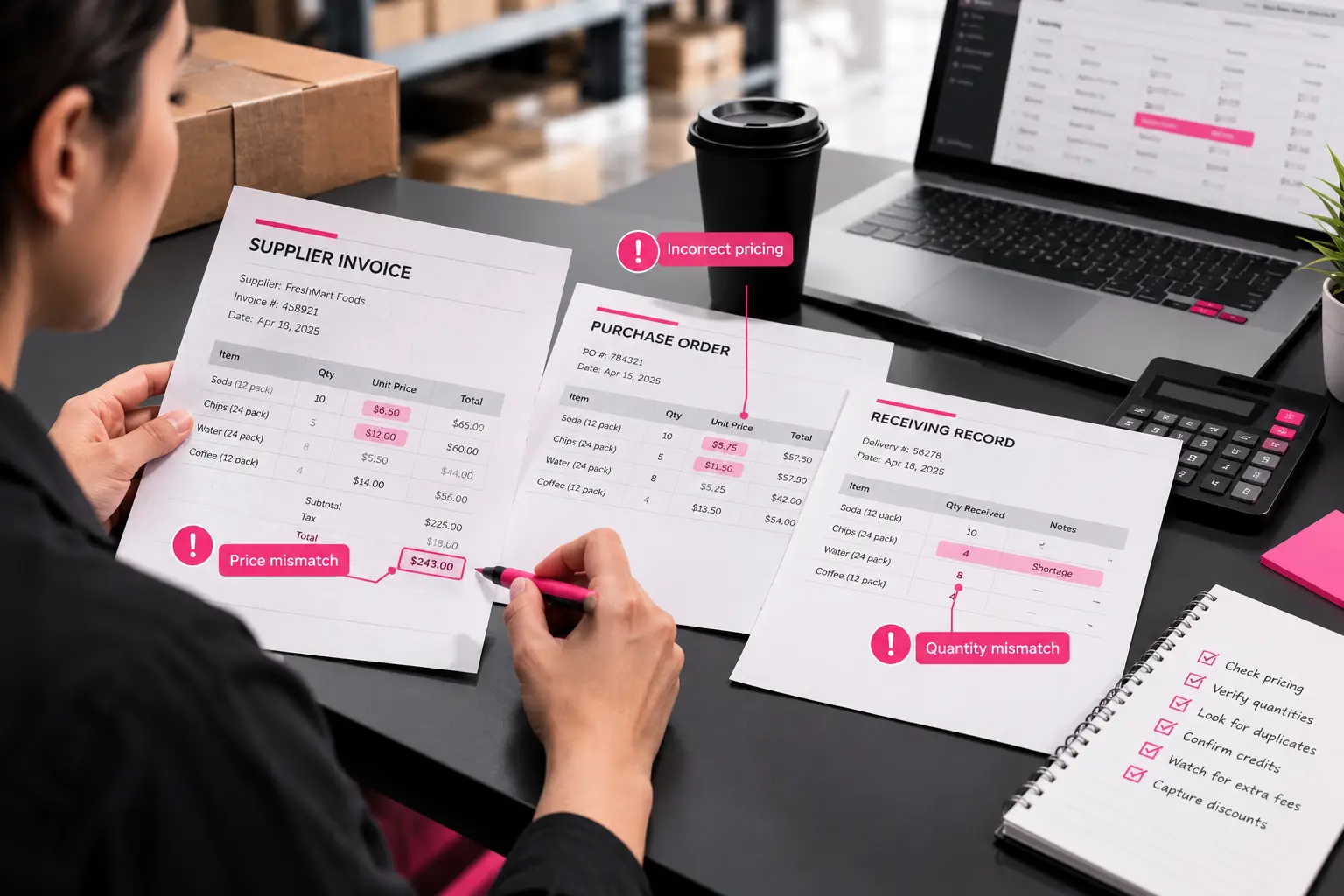
Incorrect pricing happens when a supplier bills an old rate, uses the wrong unit price, or leaves out an agreed discount. This often follows a price change or the end of a promotion. Small cost discrepancies can add up across thousands of items and frequent deliveries. If your retail prices stay the same, the higher cost may shrink your margin on those products.
Solution :
- Compare each invoice line-item price with the current price list, contract, or written quote.
- Set price variance limits to flag discrepancies for review.
- Confirm flagged price differences with the supplier before treating them as errors.
- Request a corrected invoice or credit for confirmed overcharges.
- Track recurring supplier pricing errors and address them during pricing negotiations.
2. Incorrect Billed Quantities and Short Shipments
Quantity mismatches happen when a supplier bills for the full amount ordered, but fewer units arrive. For example, an invoice may list 10 cases of beverages while the delivery has only nine. If you pay without checking, you pay for a product you never received. Your inventory records will also be off from what is on the shelf.
Solution :
- Count delivered items against the purchase order and invoice.
- Record shortages or damaged items on the delivery document before the driver leaves.
- Match invoice quantities with receiving records and delivery paperwork.
- Take photos of damaged goods or incomplete pallets as evidence.
- Notify the supplier of quantity discrepancies before paying the disputed amount.
- Track supplier deadlines for reporting shortages.
3. Duplicate Invoices and Payments
A duplicate invoice shows up when a supplier sends the same document by email and through a portal, or when staff upload the same invoice twice. It is not a loss until it is paid. A duplicate payment ties up your cash, and it becomes a loss only if you never get the money back. APQC benchmarking tracks duplicate disbursements, which means payments made, not just invoices received.
Solution :
- Check supplier name, invoice number, date, amount, and purchase order or delivery reference before approval.
- Flag invoices with matching details, even if the invoice numbers differ slightly.
- Use automated tools to identify potential duplicates and manually verify flagged matches.
- Cross-check suspected duplicate payments against supplier statements.
- Request a refund or credit for confirmed duplicate payments.
- Track duplicate payments until the refund or credit is received.
4. Missing Supplier Credits and Allowances
You may be owed credits for returns, damaged goods, confirmed shortages, price adjustments, or promotional allowances. Being eligible does not lower what you owe. A credit counts only after the supplier applies it or sends a refund. If claims are never filed or credit memos are overlooked, you end up with missed credits and may pay more than you owe.
Solution :
- Maintain a claims log with the reason, supporting evidence, claim date, amount, and responsible employee.
- File claims for eligible returns, damaged goods, shortages, price adjustments, and promotional allowances.
- Follow up with suppliers until the credit appears on a statement or invoice, or a refund is received.
- Review outstanding claims weekly or with each supplier statement.
- Mark credits are recovered only after they are applied or refunded.
5. Manual Data-Entry and Calculation Errors
These invoice processing errors happen when invoice details are entered or processed. Examples include swapped digits, wrong product codes, case price mixed up with unit price, or a discount calculated wrong. The supplier’s invoice may be correct while your own record is wrong, which makes this different from incorrect pricing. The result can be wrong payment amounts and cost discrepancies in your item records that throw off your margin reports.
Solution :
- Verify entered invoice details against the original invoice and item records.
- Check product codes, pack sizes, units of measure, totals, and applicable taxes.
- Use invoice-capture tools to reduce manual data entry.
- Review and correct any fields flagged by automated checks.
- Investigate recurring errors caused by outdated item setups, pack-size mismatches, or training gaps.
6. Unauthorized or Incorrect Fees and Surcharges
Delivery, handling, and fuel surcharge fees are not always wrong. A fee is a billing error if your supplier agreement does not allow it, it appears twice, or it uses the wrong rate. A fee that is allowed can still cost a lot, but that is something to renegotiate, not dispute. If you do not check them, unsupported charges can slowly raise your costs.
Solution :
- Compare delivery, handling, and fuel surcharge fees against supplier contracts or written terms.
- Verify fee rates, calculations, and applicable exemptions.
- Flag unrecognized, duplicated, or unauthorized charges and unexpected rate changes.
- Request written explanations from suppliers for disputed fees.
- Track disputed charges and resolutions to identify recurring billing errors.
7. Missed Discounts and Avoidable Late Fees
Payment terms may offer a discount for paying early or charge a late fee after the due date. If invoices sit in an inbox, approvals are slow, or due dates are not tracked, you can miss a discount or pay a fee you could have avoided. This is not about whether the invoice is correct. It is about when you pay a correct invoice, and it affects your cash flow.
Solution :
- Record the invoice receipt date, payment due date, and early-payment discount window.
- Set payment reminders to avoid missed discounts and late fees.
- Assign a backup approver to prevent delays when the primary approver is unavailable.
- Compare early-payment discount savings with the cost of paying sooner, considering cash needs for fuel purchases and payroll.
- Track discounts actually received and late fees incurred to identify avoidable costs.
How to Prevent Vendor Invoice Mistakes
A few simple accounts payable controls can prevent overpayments, missed credits, and unnecessary costs. If you do not use purchase orders for every purchase, compare invoices with delivery receipts, receiving records, and agreed supplier terms. The following controls can help prevent common vendor invoice mistakes:
- Match invoices to source documents. Compare purchase orders, receiving records, and invoices when available. Otherwise, verify invoices against delivery paperwork and supplier terms. Investigate discrepancies before approving payment.
- Set clear approval roles. Define approval responsibilities, establish variance limits, require additional reviews for unusual charges or significant discrepancies, and assign backup approvers.
- Use MostEdge Invoice 360 for invoice reconciliation. Manage supplier invoices, reconcile invoice information, and identify discrepancies that require investigation. This helps standardize invoice reviews and address potential billing errors before they affect margins.
- Track supplier credits and disputes. Record claims for damaged goods, shortages, incorrect pricing, and promotional allowances. Assign follow-up responsibilities and confirm credits or refunds before closing claims.
- Monitor payment deadlines. Track invoice due dates and early-payment discount windows to avoid unnecessary late fees and missed savings.
- Investigate recurring errors. Identify whether repeated discrepancies stem from supplier billing, receiving procedures, outdated product information, or approval gaps. Fix the underlying cause instead of repeatedly correcting individual invoices.
MostEdge Invoice 360 helps retailers streamline invoice processing, reconcile supplier invoices, identify billing discrepancies, and improve visibility into supplier costs across multiple locations. Track duplicate payments, unresolved discrepancies, recovered credits, missed discounts, and time spent correcting invoices to evaluate your controls.
By combining consistent invoice reviews with better cost visibility, retailers can address recurring billing errors, reduce manual reconciliation work, and protect profit margins as their businesses grow.
In a Nutshell… Protect Profitability by Paying What You Actually Owe
Vendor invoice mistakes can quietly raise your costs, tie up your cash, and cut into the profit that convenience store operators and fuel retailers keep. They cost the most when no one notices them or they are never resolved. Checking invoices against agreed terms and confirmed deliveries is what turns a suspected problem into money you actually get back.
As a next step, review recent invoices from your highest-volume suppliers to identify recurring billing errors and prioritize the controls that matter most. With Invoice 360, streamline invoice management, identify discrepancies, and improve invoice reconciliation before errors affect your margins.


5 Inventory Management Problems That Start Before a Product Reaches the Shelf

Inventory Accuracy: How to Make Better Decisions With Store Inventory Data
From Flagged to Fixed: How Loss Prevention Case Management Solves the $47.8 Billion Shrink Problem
Explore More

Trusted By Many
Become A Part Of It