Inventory Accuracy: How to Make Better Decisions With Store Inventory Data


Inventory accuracy is important, but accurate data does not always mean a store is making the right decisions.
Getting the count right is a challenge. A University of Chicago and Harvard study of nearly 370,000 inventory records from 37 stores of one retailer found 65% were inaccurate, and execution problems like these can reduce profits by more than 10%.
Even a correct count can lead to over-ordering slow-moving products, missing demand shifts, or tying up money in unsold inventory. Owners also need to understand what that inventory means. We cover why inventory accuracy matters, what causes problems, and how to read inventory data alongside sales and product movement.
Accurate inventory is the starting point, not the final answer.
What Is Inventory Accuracy?
Inventory accuracy means the quantity recorded in your inventory system matches what is actually in your store.
For example, if your system shows 120 units of a product and you physically count 120 units on the shelf and in the back room, your inventory is accurate at that point in time.
For a convenience store, accurate inventory records help owners and managers know what they have available when making purchasing, replenishment, and stocking decisions. When the numbers are wrong, it becomes harder to know whether a product is actually running low, overstocked, or simply showing an incorrect quantity in the system.
But inventory accuracy only answers one important question:
What do we have?
To make better inventory decisions, retailers also need to know:
- What is selling?
- What is slowing down?
- What needs to be purchased?
- What may need to be discounted?
A store could accurately record 120 units of a product and still have too much inventory if the product is selling slowly. Another product could have an accurate count of 10 units but need to be reordered quickly if it is selling several units every day.
This is why accurate inventory data becomes more useful when it is looked at alongside sales and product movement. Accurate inventory tells you what is in the store; sales and movement help you understand what that inventory means and what may need attention.
What Causes Inventory Accuracy Problems?
Inventory accuracy can become a problem even when a store has a reliable inventory system. The difference often starts with what happens to products as they move through the store.
Some common causes include:
- Receiving errors: The quantity received may not match what was entered into the system. Products can be missed or entered incorrectly during receiving.
- Manual entry mistakes: Incorrect quantities or inventory adjustments can create differences between the system and the physical stock.
- Unrecorded damage or loss: Damaged, expired, or lost products may remain in the system if the inventory is not adjusted.
- Returns not updated: When products are returned, the inventory record may not always be updated correctly.
- Shrinkage: Theft, misplaced products, or other unexplained losses can leave the system showing more inventory than the store actually has. IHL Group reported that theft and organized retail crime reached $379 billion worldwide in its 2023 research, and linked a 17.7% rise in North American out-of-stocks largely to theft.
- System or integration issues: Information may not move correctly between the POS, inventory system, or other store systems, creating inaccurate records.
These problems can cause the system to show that a product is available when it is not, or show less inventory than the store actually has.
The important point is that an inventory difference is not always just a counting problem. Retailers also need to understand why the difference happened and whether the same issue keeps occurring. That context becomes important when using inventory data to make purchasing and stocking decisions.
How Can Accurate Inventory Data Still Lead to Poor Decisions?
Accurate inventory data shows what is in the store, but not what to do next. To decide well, you need to understand why the numbers look the way they do. A promotion can inflate sales, a stockout can hide demand, and a healthy category can conceal weak products.
A promotion can increase sales temporarily. A snack shows 80 units on hand, matching the physical count, and sold 40 units last week. A large reorder seems reasonable, but if a promotion drove those sales, the normal rate may be much lower. Compare promotional weeks with regular weeks before ordering.
A stockout can hide real demand. An energy drink shows weak sales, but the cooler was empty for several days. Low sales may mean the product was unavailable, not unwanted. IHL Group's 2023 research found out-of-stocks made up 68.2% of inventory distortion costs, and its consumer research found 59% of shoppers say they leave stores because of empty shelves. Check how long the product was in stock before reducing the next order.
A category can hide problem products. Beverage sales may look robust while one flavor slows, another speeds up, and inventory value sits in a product that barely moves. Review individual products before deciding what to buy.
Why Should Inventory Data Be Evaluated Alongside Sales and Demand?
Inventory levels become more useful when they are looked at alongside sales and product movement. The same amount of inventory can mean very different things depending on how quickly a product sells.
Compare Stock With Sales Movement
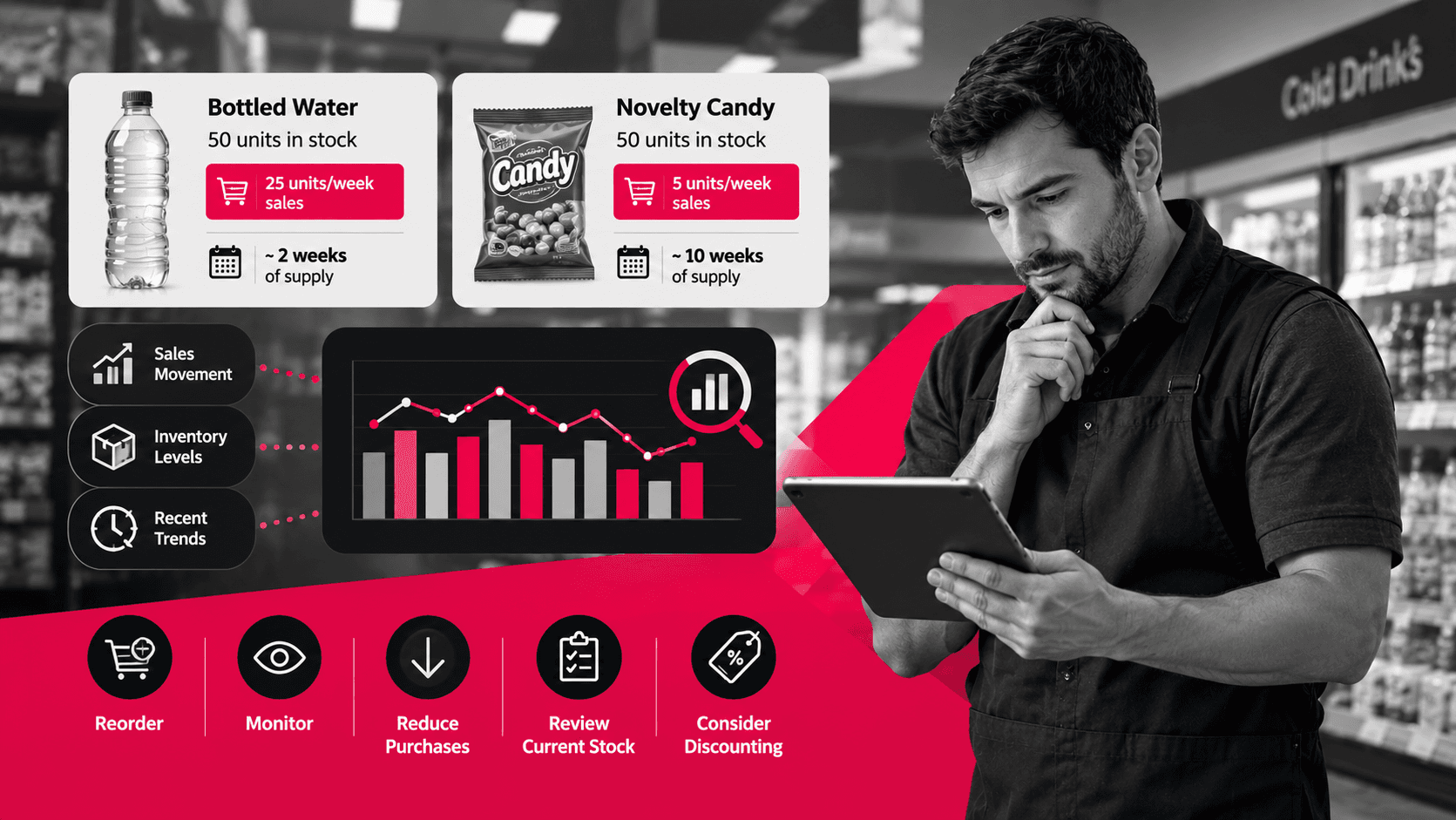
Imagine two products each have 50 units in stock.
- Bottled water sells 25 units per week, so the store has about two weeks of supply.
- Novelty candy sells 5 units per week, so the store has about 10 weeks of supply.
The inventory count is accurate in both cases, but the right decision may be different. The water may need to be reordered soon, while the candy may be overstocked.
Look for Changes in Product Movement
Product movement can also change over time. For example, a cigarette brand that normally sells 25 packs per week may recently be selling only 10.
The current inventory may still look normal, but the slower sales mean that stock will last longer. Comparing recent movement with previous sales can help the retailer notice this change.
Use the Data to Support the Next Decision
The goal is not to predict exactly what will happen. It is to understand whether inventory matches product movement and identify what may need attention.
Depending on what the data shows, the next step could be to reorder, monitor the product, reduce future purchases, review current stock, or consider discounting slow-moving inventory.
How Can Inventory Analytics Support Better Retail Decisions?
Inventory analytics is most useful when it helps a retailer understand what is happening in the store and decide what needs attention. Instead of looking at every product in the same way, retailers can use inventory variance analysis to focus on the areas that matter most.
Retailers can use inventory information and variance analysis to:
- Identify fast-moving, slow-moving, or unusual products.
- Compare inventory and product movement over time.
- Support decisions about purchasing, monitoring, or discounting products.
This is where Stock 360 can help. It brings inventory information and audit results together, making it easier to investigate what is happening in a store. By using previous audit results, Stock 360 can help identify trends and possible reasons for inventory discrepancies.
The retailer still makes the final decision, but the Stock 360 team can help explain what the data means, what needs attention, and what action may be appropriate.
The goal is not to replace the retailer's judgment. It is to make inventory information easier to find, compare, and understand so store owners can make better decisions.
Inventory Accuracy Is the Starting Point, Not the Finish Line
Knowing what is actually in the store is only the beginning. Once inventory data is accurate, retailers can start asking the more important questions: What is selling quickly? What is moving slowly? What has become dead stock? What needs to be purchased, and what may need to be discounted?
That is where inventory analytics becomes valuable. It helps turn inventory information into a clearer picture of what is happening in the store and where action may be needed.
With MostEdge Stock 360, retailers can bring inventory audits, historical results, product movement, and inventory information together to better understand these issues. The Stock 360 team can also help retailers understand what the information means and what steps they may need to take.
For a convenience store owner, the goal is simple: know what is in your store, understand how your inventory is moving, know what needs attention, and have the information and support needed to make better decisions.
Inventory accuracy is not the finish line. It is the starting point for better inventory management and a smoother-running store.
Follow MostEdge on Instagram & YouTube for practical tips on reading your inventory data and knowing what to order, hold, or discount.

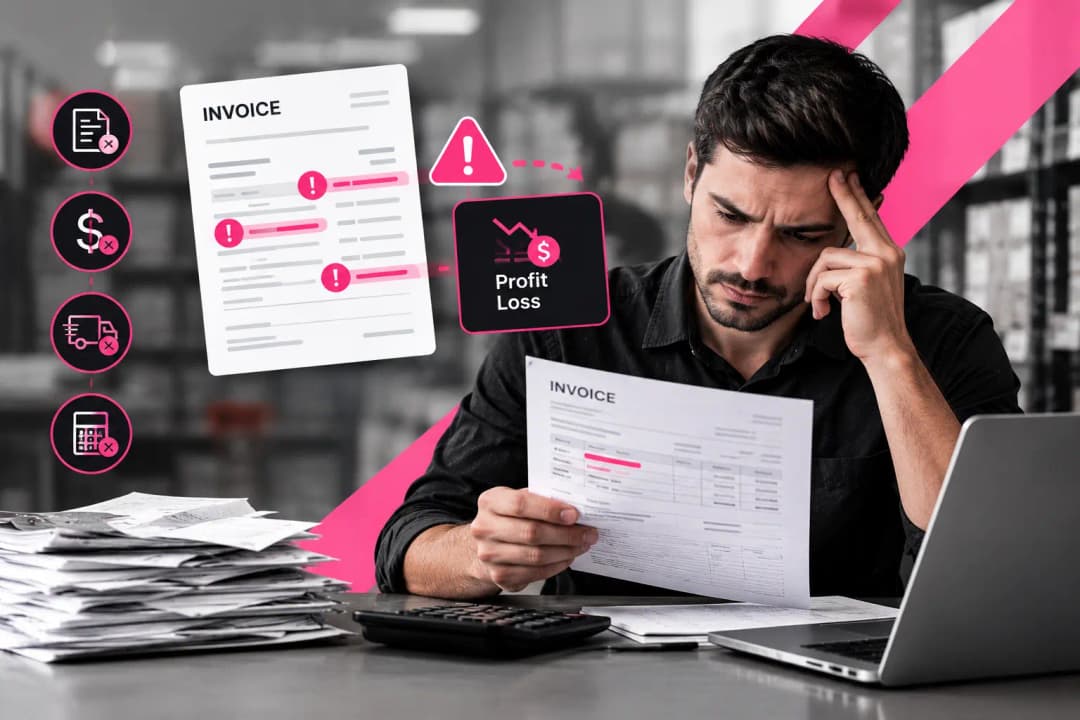
7 Common Vendor Invoice Mistakes That Impact Profitability

5 Inventory Management Problems That Start Before a Product Reaches the Shelf
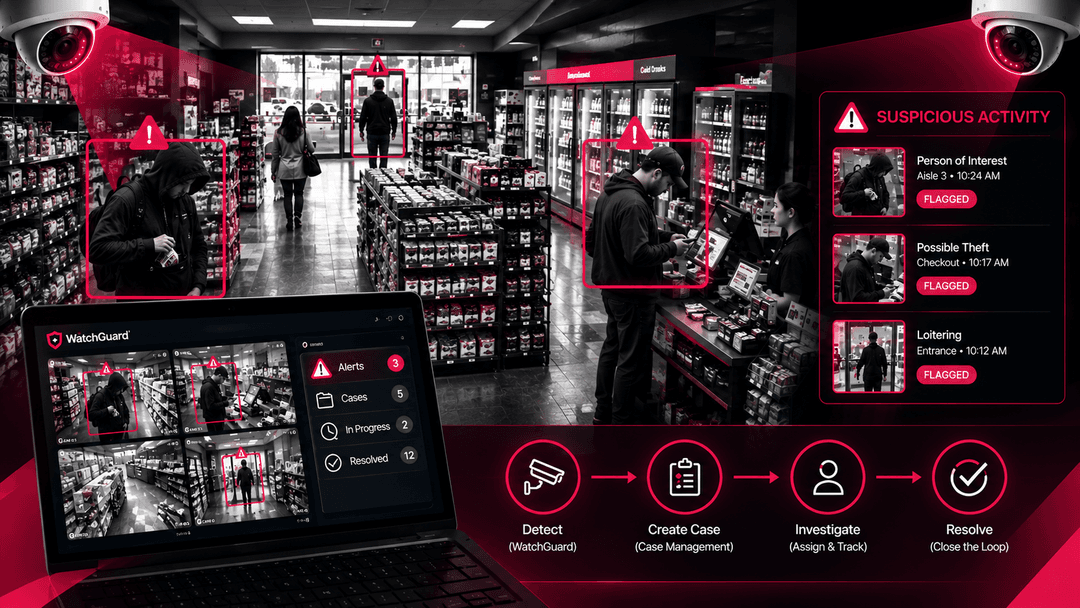
From Flagged to Fixed: How Loss Prevention Case Management Solves the $47.8 Billion Shrink Problem
Explore More

Trusted By Many
Become A Part Of It