blog

ITC's Coconut Cola Isn't Just a New Soft Drink—It's a New Retail Category. Is Your Store Ready to Measure It?
ITC's Coconut Cola Isn't Just a New Soft Drink—It's a New Retail Category. Is Your Store Ready to Measure It?

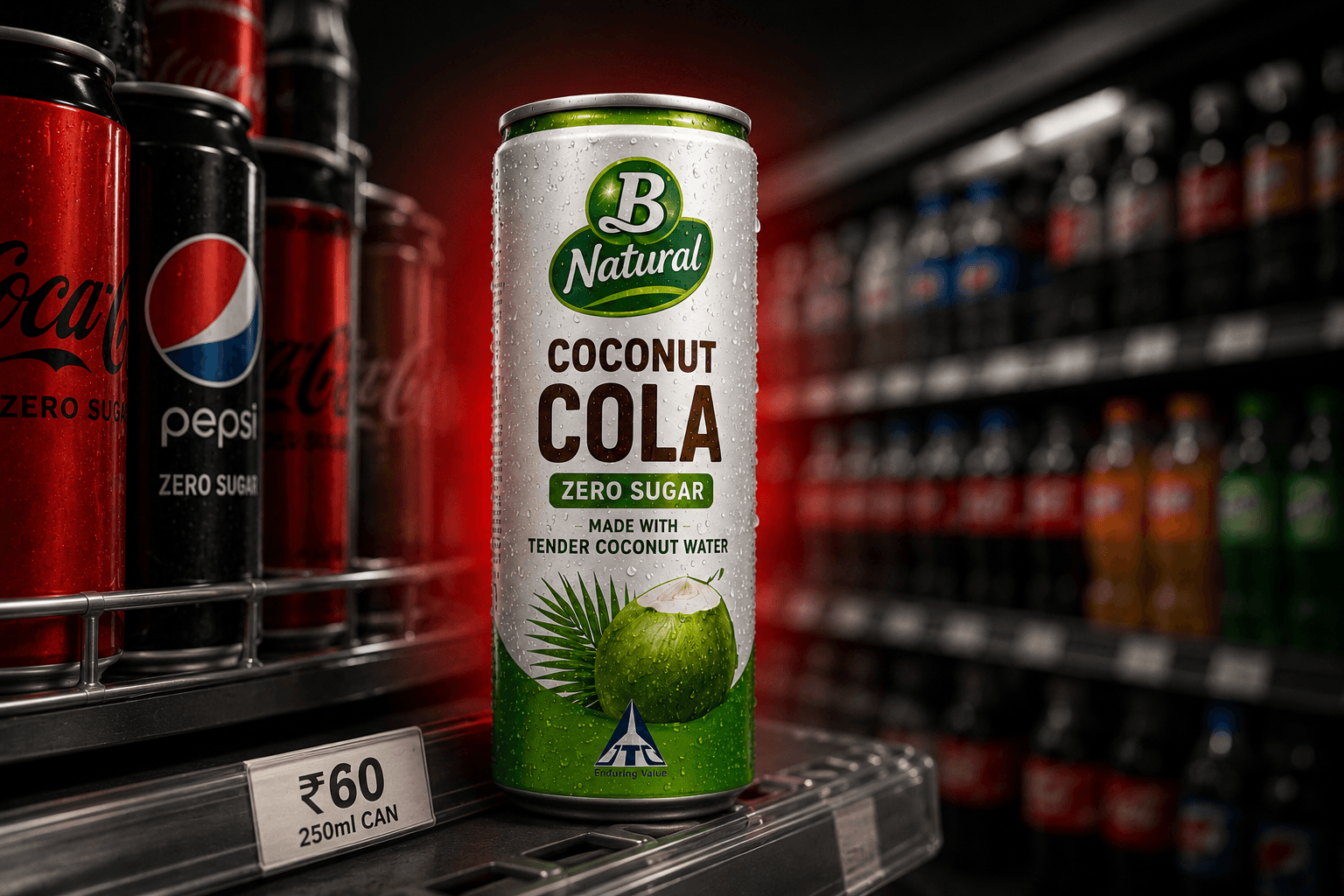
When ITC launched B Natural Coconut Cola in July 2026—a sugar-free carbonated drink made with tender coconut water, priced at ₹60 for a 250ml can—most of the commentary focused on the cola wars angle: ITC vs. Coca-Cola vs. PepsiCo vs. Reliance's resurgent Campa. That's the wrong lens for a retailer.
The right lens is this: India may be at the start of a "modern soda" category cycle, and the stores that measure it correctly in the first 90 days will own it for the next five years.
We've seen this movie before. In the US, prebiotic sodas Olipop and Poppi went from health-store curiosities to a category so large that Coca-Cola launched its own entrant (Simply Pop) and PepsiCo acquired Poppi for nearly $2 billion. In Japan, functional carbonated drinks—fibre-added colas, tokuho-certified sodas—have held dedicated shelf space in convenience stores for over a decade. The pattern is consistent: a "healthier fizz" product launches at a 40–60% price premium, incumbents dismiss it, early data shows it pulls a different shopper into the soft drink aisle, and within 24 months it's a shelf section, not a SKU.
ITC's pricing tells you it knows this playbook. At ₹60 for 250ml versus roughly ₹40 for a 300ml Diet Coke, Coconut Cola is priced like Olipop was priced against Coke Zero—deliberately premium, deliberately signalling "this is not a cola substitute, this is a new occasion."
The quick-commerce-first launch (Blinkit, Zepto, Instamart before general trade) is ITC buying itself clean, real-time trial data before it commits to your shelf. Retailers should be doing exactly the same thing—just at store level.
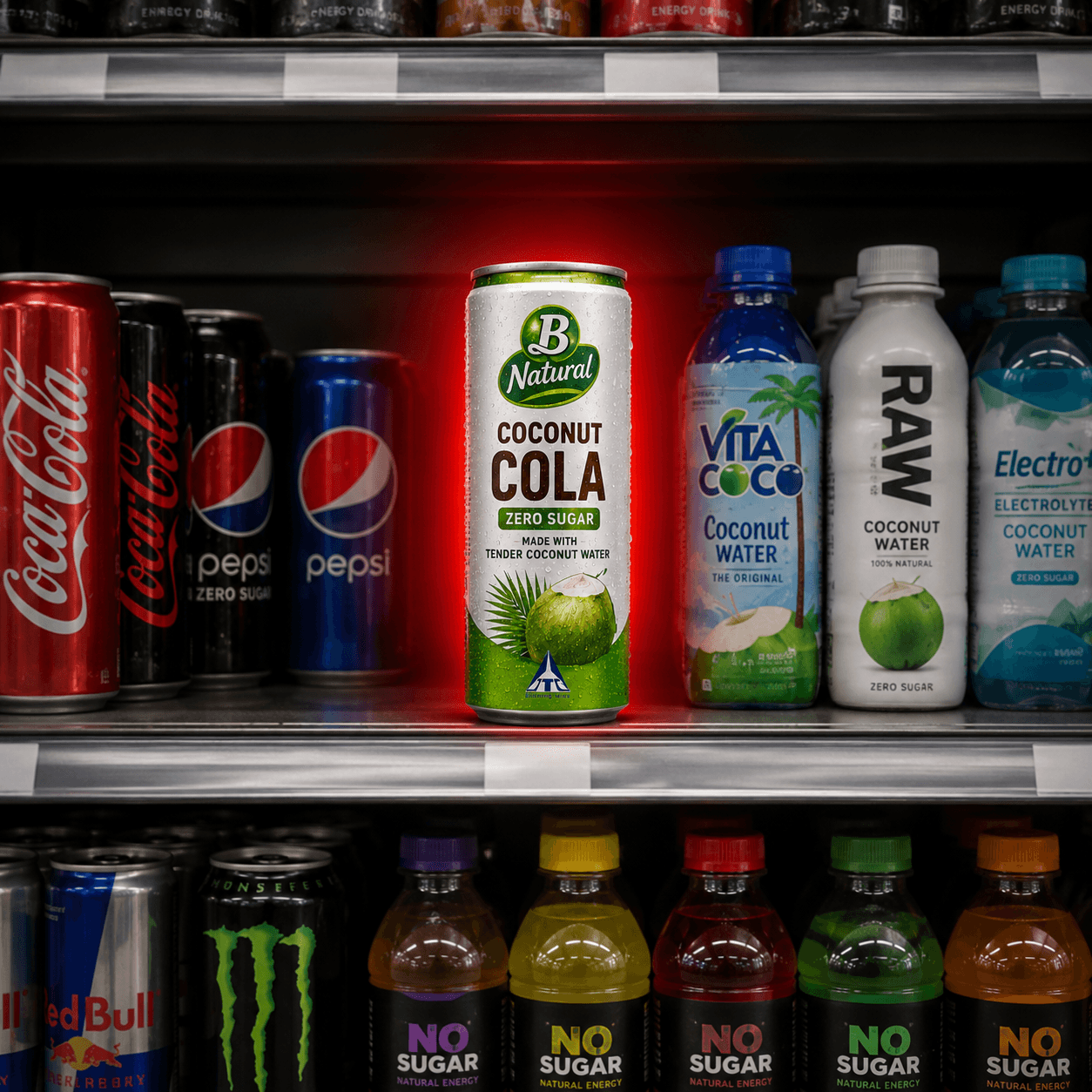
Whether Coconut Cola Performs Better Near Coconut Water, Energy Drinks, or Premium Soft Drinks
This is the single most valuable experiment a convenience store can run in the first month, and global data gives us a strong hypothesis.
When coconut water itself scaled in Western markets (Vita Coco, Zico), the counterintuitive finding was that it sold worst in the juice aisle and best in two other locations: the chilled grab-and-go cooler next to sports/energy drinks, and secondary placements near checkout. Shoppers weren't buying it as "juice"—they were buying it as functional refreshment. Similarly, US retailers found Olipop and Poppi underperformed when slotted alongside Coke and Pepsi (where they looked overpriced) and over-indexed dramatically when given a separate "better-for-you soda" block, where the price anchor was kombucha at $4, not cola at $1.
Applied to Coconut Cola, the working hypothesis for an Indian convenience store:
- Next to regular colas: likely the weakest position. At 1.8x the per-ml price of Thums Up, it invites an unfavourable comparison and reads as an overpriced cola.
- Next to coconut water and B Natural juices: moderate. It benefits from the health halo but loses the impulse/refreshment occasion.
- In a dedicated "low & no sugar" or "new + functional" block near energy drinks and premium hydration: the strongest bet. Varun Beverages reported that 63% of its March-quarter volume already came from low- and no-sugar beverages—that shopper exists in volume, is less price-sensitive, and is actively scanning for exactly this product.
The honest answer, though, is that this should not be decided by intuition. Run a rotation: two weeks in each placement, same facings, same price. A store using even basic retail analytics software can read sell-through per placement in days, not months.
If you're still reconciling this from handwritten registers, you are structurally unable to answer the question your distributor's sales rep will eventually ask you—and the answer will be decided for you by a planogram designed for someone else's store.
Which Stores Should Receive Additional Facings
Not all stores in a chain—or all stores a distributor serves—deserve equal allocation, and the global data on premium functional beverages is unambiguous about where they work.
Prioritise additional facings for stores with: a high share of card/UPI transactions (a reliable proxy for the urban, digitally-native shopper ITC is targeting via quick commerce), proximity to offices, gyms, and co-working spaces (the "4 PM functional refreshment" occasion is where premium low-sugar fizz lives), existing over-indexing on energy drinks and packaged coconut water (these shoppers have already demonstrated willingness to pay ₹50+ for a single-serve beverage), and strong cold-chain visibility—this product will barely move at ambient temperature.
Deprioritise stores where the ₹10–₹20 pack sizes dominate cola sales. ITC's own wider-rollout decision will hinge on the first 3–6 months of metro data; a smart independent retailer mirrors that logic at micro level. Give the product two to three facings in your best-fit stores rather than one facing everywhere. Thin, uniform distribution is how premium launches die—the product looks like an orphan on every shelf and a leader on none.
One more lever most convenience retailers underuse: in-store screens. A new category needs explanation at the point of decision—"sugar-free, made with tender coconut water" is a message that does real work in the three seconds before a shopper's hand moves. Retail digital signage converts a confusing new SKU into an understood one, and it's the cheapest trial-driver available for a product that ITC is not yet supporting with mass general-trade advertising.
What Analysis Should Retailers Do in the First Few Days
Three questions, in order of importance:
Are health-conscious shoppers buying it? Look at basket composition. If Coconut Cola is co-appearing with protein bars, coconut water, sugar-free gum, and salads, ITC's positioning is landing and you're acquiring the premium wellness shopper—the most valuable basket in convenience retail. When Olipop's retail data showed this pattern in US c-stores, chains responded by building entire "modern soda" sets, and early movers captured shoppers who then defaulted to that store for the category.
Are traditional cola drinkers switching? This is the cannibalisation check. Compare your Thums Up/Coke/Pepsi velocity in the two weeks after introduction against the two weeks before. Global precedent is reassuring here: prebiotic sodas in the US drove roughly 80%+ incremental category growth rather than substitution, because the buyer was often someone who had left the cola category and was being pulled back in. If your data shows the same, Coconut Cola isn't competing with your cola sales—it's expanding your beverage revenue per shopper.
Is it generating incremental sales or replacing existing beverages? The cleanest test: track total chilled-beverage revenue per hundred transactions, pre- and post-launch. If that number rises, the SKU is incremental and deserves more facings. If it's flat, you've reshuffled the same rupees at a better margin—still fine, since a ₹60 can carries more absolute margin than a ₹40 one—but it changes how hard you push.
There's a fourth signal worth watching: channel arbitrage. Because ITC launched quick-commerce-first, shoppers in your catchment are already being trained to buy this product online. Retailers running omni channel ecommerce solutions—even something as simple as a WhatsApp ordering layer or an ONDC storefront—can intercept that demand rather than watch Blinkit own the repeat purchase. The first retailer in a locality to reliably stock a quick-commerce-native product in the physical cold chest wins the "I want it now, it's downstairs" occasion permanently.
If This Works, Here's the Inventory Wave Coming Next
This is the part convenience store owners should actually plan for. If Coconut Cola holds velocity past the novelty window, the precedent from the US, Japan, and ITC's own portfolio signals tells you what lands on your shelf in the next 12–24 months:
Traditional Indian flavours in carbonated, packaged formats. Jeera soda, aam panna, kokum, nannari, buttermilk-based fizz, sugarcane—flavours that currently live with regional players and street vendors will be nationalised by large FMCG balance sheets, exactly as ITC is nationalising the coconut-plus-fizz idea. ITC is already piloting Sunfeast Sip N Fizz in Andhra Pradesh and Telangana as a more accessible second entry, and it has publicly stated more flavours, variants, and pack sizes are coming. Reliance, having proven the distribution model with Campa's ₹4,700 crore year, will not concede the "desi functional" space. Expect Coca-Cola and PepsiCo to respond the way they did in the US—by launching or acquiring rather than ceding shelf.
A structural shelf change. The practical consequence: your chilled cabinet will need a fourth zone. Today most Indian convenience coolers run three—colas/CSDs, juices/dairy, energy/hydration. The emerging fourth is "functional & traditional fizz," and the stores that create it early (even a single labelled shelf strip) will be the reference point when distributors allocate the next five launches.
A data expectation shift. Brands launching quick-commerce-first arrive with granular expectations. ITC knows its Blinkit conversion rates by pin code; when its team evaluates general-trade partners for the wider rollout, stores that can show placement-level and daypart-level sales data will negotiate better margins, launch stock, and promotional support than stores that can't. Measurement is no longer back-office hygiene—it is the currency you trade for allocation.
The soft drink aisle has been the most static real estate in Indian convenience retail for thirty years. Coconut Cola is a credible signal that it's about to become the most dynamic. The retailers who treat this launch as a measurement exercise—not just a stocking decision—will be the ones the next ten launches are built around.
Want to run the 2-week placement rotation this article describes — and actually read the results? We'll show you how in a 20-minute call.

7 Common Vendor Invoice Mistakes That Impact Profitability
5 Inventory Management Problems That Start Before a Product Reaches the Shelf
Inventory Accuracy: How to Make Better Decisions With Store Inventory Data
Explore More

Trusted By Many
Become A Part Of It