Chapter 2: When 5 Stores Meant 5× Invoice Confusion (and How Sam Fixed It)


The average convenience store processes around 90 supplier invoices every month. For a retailer operating multiple locations, that number grows quickly. When Sam expanded his business from one store to five locations, invoice management suddenly became far more complicated than he expected.
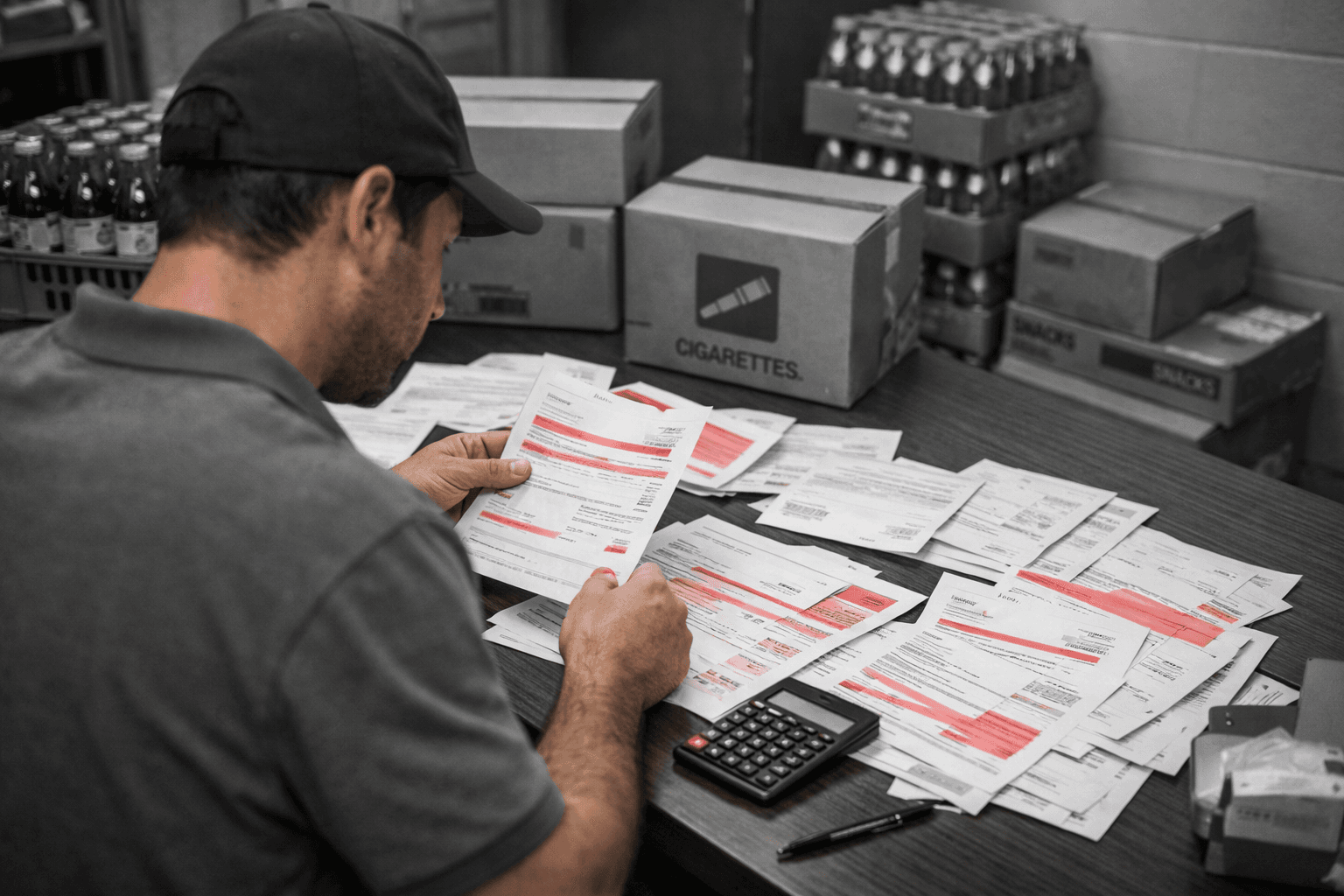
At first, invoices felt like a routine part of running the store. Deliveries arrived, employees checked the products, signed the paperwork, and placed the invoice in a folder. But as the number of stores increased, Sam realized that this simple process was multiplying across every location.
What once took a few minutes in a single store slowly turned into hours of work every week. More importantly, Sam began to realize that small invoice discrepancies could quietly affect his margins if they were not noticed early.
The Operational Reality of Convenience Store Retail
Convenience stores operate in a fast-moving environment where products must be replenished frequently to keep shelves stocked. High-demand categories such as beverages, snacks, dairy items, cigarettes, and tobacco products are often delivered multiple times each week.
According to the National Association of Convenience Stores, the average convenience store invoice management carries between 3,000 and 4,000 SKUs. Managing this many items requires frequent supplier deliveries and careful tracking of purchasing costs.
Every delivery generates an invoice that must be reviewed to ensure the store was billed correctly. Store teams typically verify several things before accepting an invoice:
- Product quantities delivered
- Supplier pricing for each item
- Promotional discounts or allowances
- Total invoice amount charged
In a single store, this process feels manageable. But when Sam began operating five stores, the number of deliveries and invoices increased rapidly. Instead of reviewing a few supplier invoice tracking each week, he was now dealing with hundreds of invoices every month across multiple locations.
The Hidden Cost of Manual Invoice Verification
Invoice verification is often treated as a small operational task, but the time involved adds up quickly when calculated over an entire month.
On average, reviewing a supplier invoice takes about three minutes. Store employees usually compare the invoice with the delivery and confirm that the quantities match before recording it. For a store receiving around 90 invoices per month, the time required becomes:
- 90 invoices × 3 minutes = 270 minutes
- 270 minutes = approximately 4 to 4.5 hours per month
If the average store employee earns about $12 per hour, the monthly labor cost for invoice verification becomes:
- $12 × 4 hours = $48 (approximately $50 per month)
When calculated annually, the numbers look like this:
- $50 × 12 months = $600 per store per year
For Sam’s five-store operation, the total cost becomes:
- $600 × 5 stores = $3,000 per year
While $3,000 may not seem overwhelming for a growing business, this figure only reflects the labor cost of reviewing invoices. It does not include the financial impact of pricing discrepancies or missing discounts that may go unnoticed.
Why Invoice Accuracy Directly Affects Store Margins
Many gas station and convenience store owners focus heavily on fuel sales because fuel drives traffic. However, the majority of profits actually come from merchandise sold inside the store.
According to the National Association of Convenience Stores, more than 60% of gross profit in convenience stores comes from in-store merchandise, while fuel primarily brings customers to the location.
This makes accurate product cost tracking extremely important. Supplier prices change frequently, and those changes often appear first on the invoice. For example, consider a common situation:
- A beverage case previously purchased for $15
- The next invoice lists the same product at $18
If that price change goes unnoticed, the store is now paying 20% more for the same product. When similar changes occur across multiple deliveries and multiple stores, the effect on overall margins becomes significant.
Store employees usually focus on confirming that the correct number of items arrived. However, the pricing details on the invoice may not always receive the same level of attention, especially during busy store operations.
When Multi-Store Operations Create Invoice Confusion
As Sam expanded his business, he discovered another challenge: every store handled invoices differently.
Some managers kept printed invoices in folders inside the store office. Others took photos of invoices and sent them through messaging apps. Some suppliers emailed invoices later, while others provided paper copies during deliveries.
These methods worked individually at each location, but they created confusion when Sam needed to review purchasing activity across the entire business. Finding past invoices or checking vendor pricing often meant contacting multiple stores and searching through different files.
Operational research from Deloitte shows that businesses relying heavily on manual administrative processes can spend 20% to 30% more time on routine tasks such as document verification and reconciliation.
For multi-store retail operations, invoice management is one of the areas where this inefficiency becomes most visible.
Bringing Structure to Invoice Management
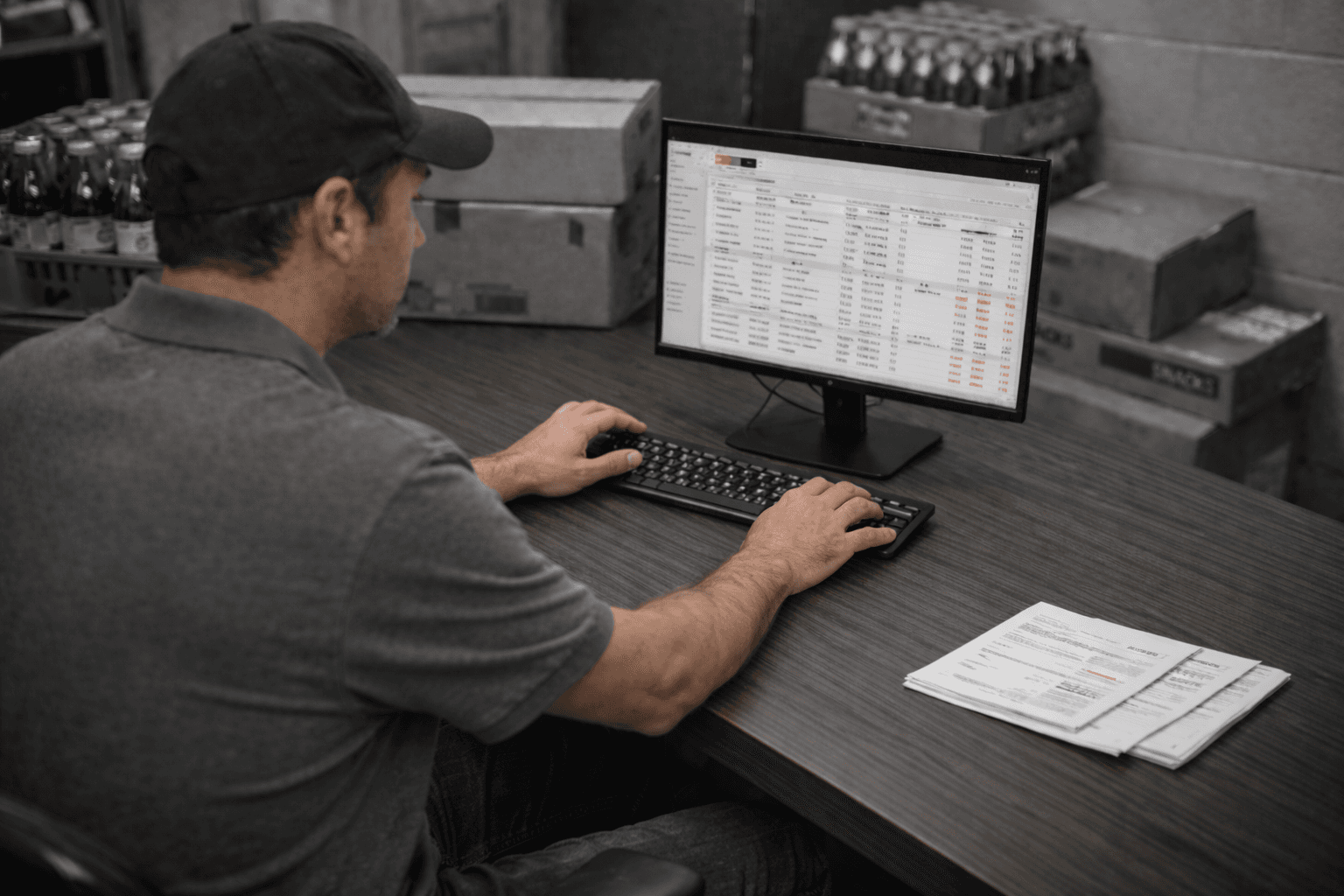
Once Sam realized that invoice tracking had become fragmented across his stores, he decided to standardize the process. Instead of each location managing invoices in its own way, all supplier invoices would now be recorded through a centralized system.
Because invoice management was already available through Invoice 360 within the MercuryOne back-office platform, implementing the process across stores was relatively straightforward.
Store teams continued doing what they were already familiar with during deliveries, but the workflow became more structured:
- Verify the delivery and confirm the items received
- Check the supplier pricing and product costs listed on the invoice
- Upload the invoice into the system for centralized tracking
Once the invoice was recorded, Sam could immediately see supplier pricing, purchase history, and product cost changes across all five stores in one place. Instead of searching through paperwork or contacting individual stores, he could review vendor pricing and purchasing data from a single dashboard.
Turning Invoice Data Into Better Purchasing Decisions
Centralizing invoices did more than reduce paperwork. It gave Sam a clearer understanding of what he was paying vendors and where those costs were changing. With Invoice 360, Sam could quickly identify:
- Item cost changes by UPC code
- Price differences between vendors
- Missing promotional discounts
- Products where supplier price increases were affecting margins
This visibility allowed him to compare supplier pricing and identify better purchasing options much faster. Instead of discovering price changes weeks later, Sam could review vendor costs and make purchasing decisions within a few hours.
In some cases, switching vendors or negotiating pricing adjustments helped improve product margins almost immediately.
Protecting Profit Margins as the Business Grows
Expanding from one convenience store to several locations creates new opportunities for revenue, but it also introduces operational challenges that are not always immediately visible.
Invoice management is one of those challenges. With an average of 90 supplier invoices per store each month, manual verification can quickly become time-consuming and difficult to manage across multiple locations.
More importantly, small pricing discrepancies or missing discounts can quietly reduce profit margins if they go unnoticed.
By managing invoices through Invoice 360 inside the MercuryOne back-office system, Sam turned what used to be scattered paperwork into a structured process. Instead of reacting to pricing issues after they affected margins, he could identify cost changes early and make smarter purchasing decisions.
Sam’s journey did not begin here. In Chapter 1, he discovered how MercuryOne helped him gain the financial visibility needed to grow from one store to five locations.
But as the business continues expanding, a new challenge appears: if a product price needs to change across every store, can it be updated everywhere at the same time from a single system?
That’s exactly what we’ll explore in Chapter 3: When One Price Change Meant Updating 5 Stores.


You Found a $10,000 Inventory Variance. What Should You Do Next?

Beyond Fast Response: What C-Store Operators Really Need From Customer Support

Back-to-School 2026 Shoppers Are Spending Differently—and Convenience Stores Have an Opening
Explore More

Trusted By Many
Become A Part Of It