Chapter 1: When Sales Looked Strong but Profits Didn’t


Six months into running his first highway convenience store, Sam felt confident the business was on the right track. The store stayed busy all day, customer traffic was steady, and core categories like cigarettes, cold drinks, and snacks sold consistently. From the outside, everything looked healthy. Friends praised the performance, vendors were eager to supply him, and daily sales reports showed strong numbers.
Yet at the end of each month, when Sam checked how much money was actually left, the results felt inconsistent. Some months ended comfortably, others felt tight, even though store activity barely changed. At first, he blamed seasonality and worked longer hours, trusting effort would turn into profit. What he did not realize was that sales activity and financial control are two very different things.
Revenue was coming in, but without visibility into margins, pricing, inventory movement, and cash flow, money was quietly slipping away. The store looked busy, but the business lacked clarity.
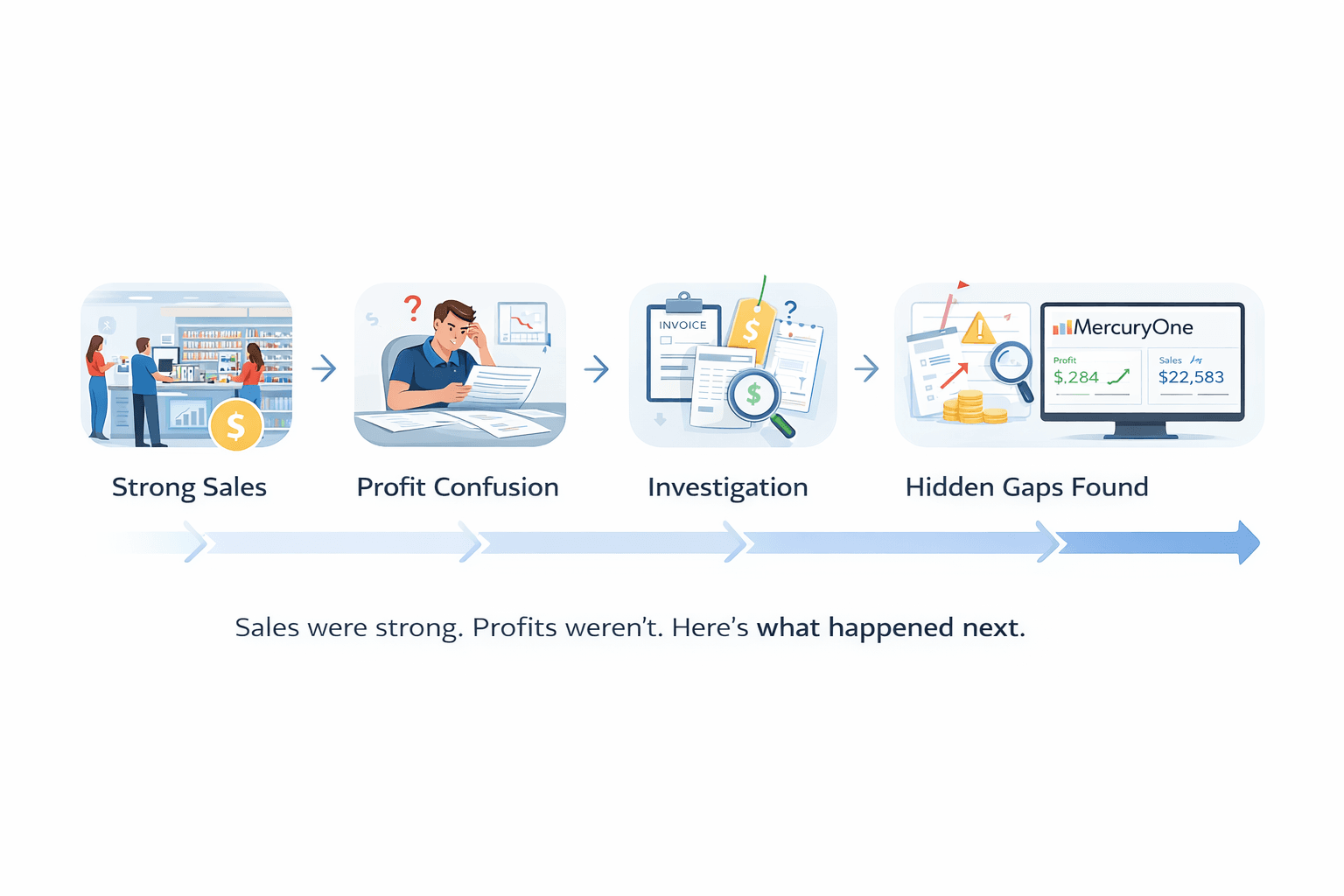
When a smart pricing move reduced profit
The first warning came from a casual comment by a regular customer. One evening, the customer mentioned that Coke was cheaper at the station across the road. Curious and concerned, Sam checked for himself later that night. The competitor was selling Coke at $1.89, while his price was $2.09.
Wanting to stay competitive, he immediately reduced his price. Over the next week, Coke sales increased. The higher volume felt reassuring, and he believed the issue had been fixed.
What was not visible was the margin impact. The competing station was running Coke as a loss leader, pricing it close to cost to pull customers inside. Sam’s purchase price was higher. By matching the shelf price, he quietly reduced his per-unit margin.
More bottles moved, but each sale generated less profit. The problem only surfaced later, when cash on hand did not increase despite higher volume.
The invoice that exposed a bigger gap
Trying to review past purchase prices and margins quickly became frustrating. Current sales were visible in the POS, but historical data lived across spreadsheets with missing entries and unrecorded invoices. After a short attempt to piece things together, the analysis was postponed.
A few weeks later, a Red Bull delivery brought the issue into sharper focus. The quantity looked right, but the invoice total felt higher than usual. Nearly two hours were spent searching through WhatsApp messages, paper files, and email threads to find older invoices.
Even after the effort, there was not enough confidence to challenge the vendor. That moment exposed a deeper issue. There was no single, reliable place where numbers lived.
Purchase history, margins, pricing changes, and monthly performance existed only as scattered pieces. Without consolidation, decisions relied on memory and instinct rather than facts.
Why spreadsheets failed in daily retail
There was a genuine attempt to stay disciplined. Sales, purchases, and cash closings were recorded nightly in Excel. In theory, the process made sense. In practice, it broke down under daily pressure.
Busy days went unrecorded. Purchases were entered late. Staff updates were inconsistent. Within months, the data became incomplete and unreliable.
Even when information existed, analysis was exhausting. Answering a basic question about monthly profit required multiple calculations and reconciliations. After long days on the floor, that effort felt unrealistic.
Gradually, the habit faded. Once regular checking stopped, control faded with it. Excel was not the real problem. Practicality was.

Replacing guesswork with visibility
There was no single crisis that forced change. It was the steady accumulation of confusion and uncertainty. During a conversation with a trusted friend, Sam received direct advice: stop managing a growing retail operation with spreadsheets and adopt a proper back office system.
That recommendation led him to MercuryOne by MostEdge.
The first step was intentionally simple. The focus was on consolidation, not analysis. Purchase invoices, product costs, selling prices, and POS sales were brought into one place.
For the first time, everything could be seen on a single screen. That alone created a foundation for control.
When data turned into confident decisions
With clean data in place, patterns emerged naturally. Pricing decisions could be reviewed with historical context. Past purchase prices were visible, and margin changes were clear.
Vendor conversations changed when historical rates were easy to reference. Stock planning improved once daily movement and reorder timing were visible. Ordering stopped being guesswork.
Cash discrepancies became factual discussions instead of emotional ones. Each shift showed expected versus actual closing, making corrections immediate and objective.
When control led to growth
After a few months of consistent data, monthly profit calculations finally felt trustworthy. Sales were adjusted for purchases, expenses, wastage, and shrinkage. The number made sense and became actionable.
The system did not promise instant growth or automation. It provided one source of truth and the clarity needed to make better decisions consistently.
Looking back, the difference was clear. Growth did not come from working harder or chasing volume. It came from understanding where money flowed and where it leaked. That clarity gave Sam confidence, and confidence made growth sustainable.
That is the real role of back office control. And that is what MercuryOne ultimately gave Sam.
Sam fixed visibility in one store. But when he expanded to 5 locations, a new problem surfaced—invoice chaos across vendors, pricing mismatches, and no single source of truth.


You Found a $10,000 Inventory Variance. What Should You Do Next?

Beyond Fast Response: What C-Store Operators Really Need From Customer Support
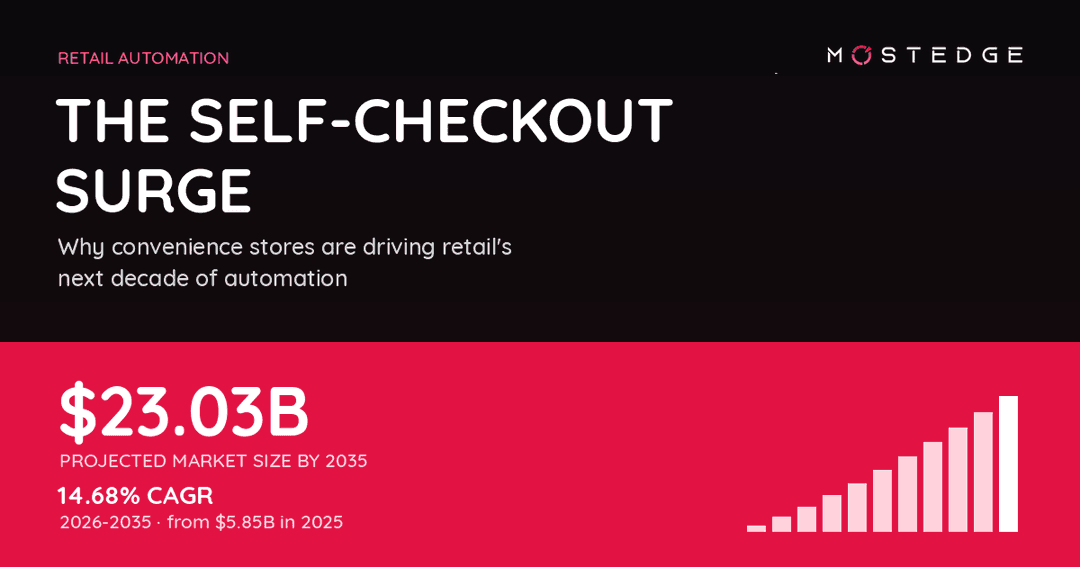
The Self-Checkout Kiosk Surge: Why Convenience Stores Are Driving the Next Decade of Retail Automation
Explore More

Trusted By Many
Become A Part Of It